

Bioprinting is a revolutionary technology at the intersection of engineering, biology, and medicine. It uses 3D printing techniques to construct biological tissues and organs by layering living cells, often referred to as bioinks, to create structures that function like natural tissues. This innovative approach holds immense potential for regenerative medicine, pharmaceutical research, and complex surgical treatments, making it one of the most promising advancements in medical technology today.
Principles of Bioprinting
At its core, bioprinting involves depositing layers of cells and biocompatible materials to build up tissue-like structures. Bioinks, which are central to this process, are typically composed of a mixture of living cells and a supportive hydrogel that provides scaffolding for cells to maintain their structure as they grow.
Bioprinting technologies include:
Inkjet-based bioprinting: This method uses standard inkjet printing technology to deposit bioinks onto a substrate, allowing for high-speed printing but often at the cost of cell viability due to the shear stress encountered during the printing process.
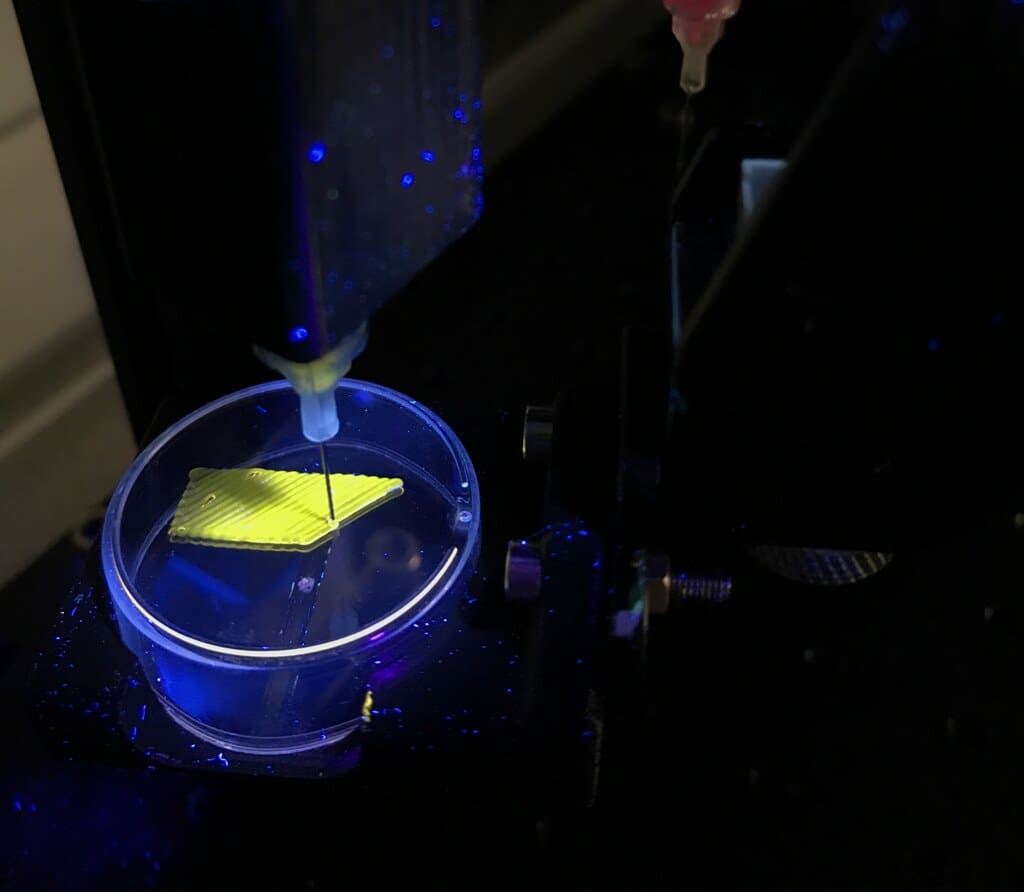
Extrusion-based bioprinting: More akin to traditional 3D printing, this technique extrudes bioinks through a nozzle, enabling the printing of a wider range of viscosities and cell densities. It’s particularly suited for fabricating vascular structures and larger tissues.
Laser-assisted bioprinting: A high-resolution method that uses laser energy to precisely deposit cells from a ribbon onto a substrate. This technique is notable for its accuracy and the minimal physical stress it imposes on cells.
Key Applications of Bioprinting
Bioprinting’s applications are broad and impactful:
Tissue and Organ Fabrication: One of the most significant applications of bioprinting is in creating functional tissues for medical implants and organ repair. Researchers are working towards bioprinting complex structures like hearts, livers, and kidneys that could one day alleviate the shortage of organ donors.
Medical Research and Pharmaceutical Testing: Bioprinted tissues are increasingly used to simulate human organs for drug testing and disease modeling. This not only accelerates the development of new drugs but also reduces the reliance on animal testing, offering more accurate and ethical testing methods.
Personalized Medicine: Bioprinting can create tissues and organs that match the patient’s biological profile, potentially improving the success rates of transplants and reducing the risks associated with immune rejection.
Challenges in Bioprinting
Despite its promise, bioprinting faces several challenges:
Technical Challenges: The complexity of replicating human tissue structures, including their detailed microarchitecture and the integration of functional blood vessels and nerves, remains a significant hurdle.
Ethical and Regulatory Challenges: As with any technology manipulating life at a fundamental level, bioprinting raises ethical questions concerning the commercialization of human body parts and the potential for cloning. Regulatory frameworks are still catching up to these advancements, aiming to ensure safety without stifling innovation.
The Future of Bioprinting
The future of bioprinting is incredibly promising. Continued advancements in 3D printing technologies, bioink development, and tissue engineering are expected to expand its capabilities further. The ultimate goal of creating fully functional, transplantable organs could dramatically reduce transplant waiting lists and revolutionize personalized medicine.
Bioprinting represents a frontier in medical science, blending technology and biology to create solutions that were once the realm of science fiction. As it continues to develop, bioprinting promises not only to advance our capabilities in medical treatment and research but also to challenge our ethical frameworks and regulatory policies. For all its potential, bioprinting requires careful consideration and collaboration across disciplines to fully realize its benefits while addressing its profound implications for the future of medicine.