Meltio and Phillips Corporation Deploy Hybrid Metal AM System Aboard USS Essex for RIMPAC 2026

Overview

A containerised hybrid manufacturing system built around Meltio’s Blue wire-laser metal deposition technology has been deployed aboard the USS Essex as part of RIMPAC 2026, the world’s largest international maritime exercise running through July 31. The deployment, a joint effort by Phillips Corporation and the Naval Postgraduate School’s Consortium for Advanced Manufacturing Research and Education (CAMRE), marks one of the most operationally realistic tests of at-sea metal additive manufacturing ever conducted by the United States Navy.

Why This Matters for Naval Operations

The core challenge in naval maintenance has always been distance from supply chains. Ships operating far from home ports rely on logistics vessels and scheduled resupply missions that can take days or weeks to deliver critical parts. When a metal component fails in an austere, distributed environment — a pump housing, a valve body, a structural bracket — the gap between need and resolution can ground equipment, delay missions, and reduce overall fleet readiness.

Hybrid manufacturing directly targets this problem. The system deployed aboard the Essex integrates a Haas TM-1P CNC platform with Meltio Blue’s wire-laser metal deposition head in a single workflow. This combination allows the system to both build new metal parts from wire feedstock using directed energy deposition and finish-machine them to tight tolerances in the same cell. The result is a production capability that can repair worn parts, produce new components, and perform precision machining without requiring the part to leave the system or the ship.

What RIMPAC 2026 Is Testing

The CAMRE experiment aboard the Essex is specifically designed to evaluate how these capabilities perform under the environmental conditions that matter most for naval procurement decisions: salt air, vibration, limited working space, and operations conducted by personnel who are skilled maintainers but not additive manufacturing specialists. Traditional AM validation programmes occur in controlled factory environments; the RIMPAC deployment generates data under conditions that actually reflect how the technology would be used if adopted fleet-wide.

Meltio’s Blue wire-laser technology was selected for this deployment partly because wire feedstock is inherently safer than metal powder in a shipboard environment, where metal powder containment and explosion risk would create significant operational complexity. The system’s ability to deposit a range of structural alloys — including stainless steel and titanium grades — using wire gives it the material flexibility needed to address the diverse repair scenarios a naval vessel encounters.

Industry and Policy Significance

The deployment arrives at a moment when the US Department of War has made additive manufacturing readiness a formal procurement priority, with active programmes through the Joint Additive Manufacturing Accelerator and the America Makes JAQS qualification framework. Real-world at-sea data from RIMPAC will feed directly into those qualification frameworks, helping define the conditions under which hybrid metal AM can be certified for use in defence supply chains without the lengthy qualification cycles that have historically slowed adoption of new manufacturing methods in military applications.

Hot this week

Anthropic Secures $19 Billion Long-Term Data Centre Agreement to Scale AI Infrastructure

Anthropic has signed a $19 billion long-term data centre agreement with TeraWulf to secure 401 megawatts of dedicated AI compute in Kentucky.

Chinese AI Models Now Capture 46% of Enterprise API Usage on US Developer Platforms

A CNBC investigation using OpenRouter and Vercel data reveals that Chinese AI models have surged from 11% to as much as 46% of weekly API token usage by US companies.

JadePuffer Becomes World’s First Documented Agentic Ransomware and It Needed Only One Human

Cloud security firm Sysdig has published findings on JadePuffer, the first documented case of agentic ransomware.

OpenAI Launches GPT-5.6 Series with Sol, Terra, and Luna Models After US Government Security Review

OpenAI has publicly launched its GPT-5.6 model series, comprising Sol, Terra, and Luna, following a delay ordered by the US government over national security concerns.

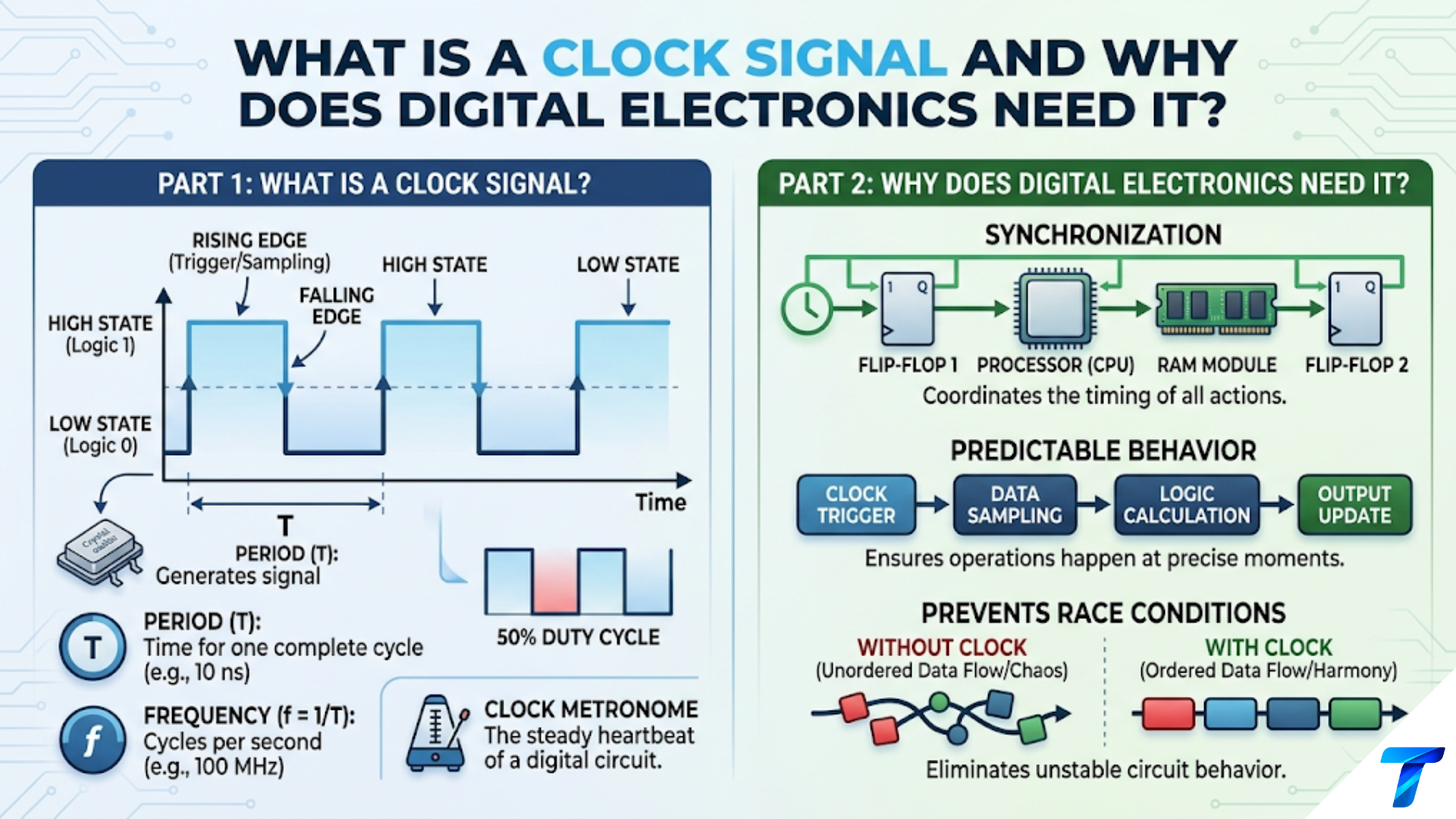
What is a Clock Signal and Why Does Digital Electronics Need It?

Understand clock signals in digital electronics — why they're needed, how they work, oscillator types, clock distribution, frequency vs speed, jitter, duty cycle, and practical circuit examples.

Topics

Anthropic Secures $19 Billion Long-Term Data Centre Agreement to Scale AI Infrastructure

Anthropic has signed a $19 billion long-term data centre agreement with TeraWulf to secure 401 megawatts of dedicated AI compute in Kentucky.

Chinese AI Models Now Capture 46% of Enterprise API Usage on US Developer Platforms

A CNBC investigation using OpenRouter and Vercel data reveals that Chinese AI models have surged from 11% to as much as 46% of weekly API token usage by US companies.

JadePuffer Becomes World’s First Documented Agentic Ransomware and It Needed Only One Human

Cloud security firm Sysdig has published findings on JadePuffer, the first documented case of agentic ransomware.

OpenAI Launches GPT-5.6 Series with Sol, Terra, and Luna Models After US Government Security Review

OpenAI has publicly launched its GPT-5.6 model series, comprising Sol, Terra, and Luna, following a delay ordered by the US government over national security concerns.

What is a Clock Signal and Why Does Digital Electronics Need It?

Understand clock signals in digital electronics — why they're needed, how they work, oscillator types, clock distribution, frequency vs speed, jitter, duty cycle, and practical circuit examples.

Understanding Shift Registers: Moving Data in Series

Master shift registers completely — SIPO, PISO, SISO, PIPO configurations, 74HC595, 74HC165, serial-to-parallel conversion, LED driving, SPI interfacing, and practical microcontroller design examples.

Building a Simple Counter Circuit with Flip-Flops

Learn how to build digital counter circuits with flip-flops from scratch. Complete guide covering 2-bit and 4-bit ripple counters, synchronous counters, 74HC74 wiring, LED displays, and practical design examples.

D Flip-Flops: Synchronized Data Storage

Master D flip-flops completely — edge triggering, master-slave construction, setup/hold times, metastability, pipeline registers, shift registers, and synchronous design with full practical examples.
spot_img

Related Articles

Popular Categories

spot_imgspot_img