
Toronto-based autonomous vehicle company Waabi announced on January 28, 2026, that it has secured $1 billion in total funding to expand from autonomous trucking into robotaxis through an exclusive partnership with Uber. The deal represents the largest fundraise in Canadian technology history and positions Waabi as a major competitor in the rapidly intensifying autonomous vehicle market.
The funding consists of a $750 million Series C round co-led by Khosla Ventures and G2 Venture Partners, plus an additional $250 million milestone-based investment from Uber contingent on achieving specific deployment targets. The company will use the capital to advance its “Physical AI Platform” technology that enables self-driving capabilities for both trucks and passenger vehicles.
Under the partnership agreement, Waabi will exclusively deploy robotaxis on Uber’s ride-hailing platform, with plans to introduce at least 25,000 autonomous vehicles over time. This exclusive arrangement differentiates Waabi from competitors like Waymo, which operates its own consumer app while also partnering with Uber in select markets. By focusing solely on technology development while Uber handles consumer marketing and operations, Waabi avoids direct competition with its strategic partner.
Waabi’s approach to autonomous vehicles emphasizes capital efficiency through advanced simulation. Unlike competitors that spent billions testing vehicles extensively on public roads, Waabi trains its AI models primarily in virtual environments before real-world deployment. Founder and CEO Raquel Urtasun claims this methodology allows Waabi to achieve what predecessors accomplished with thousands of engineers and billions in spending for a fraction of the cost.
The company’s “Physical AI Platform” uses end-to-end neural networks combined with advanced simulation technology that can generalize across different vehicle types, geographic locations, and operating conditions. This architecture allows the same core AI system to power both long-haul autonomous trucks and city-navigating robotaxis with minimal customization required for different form factors.
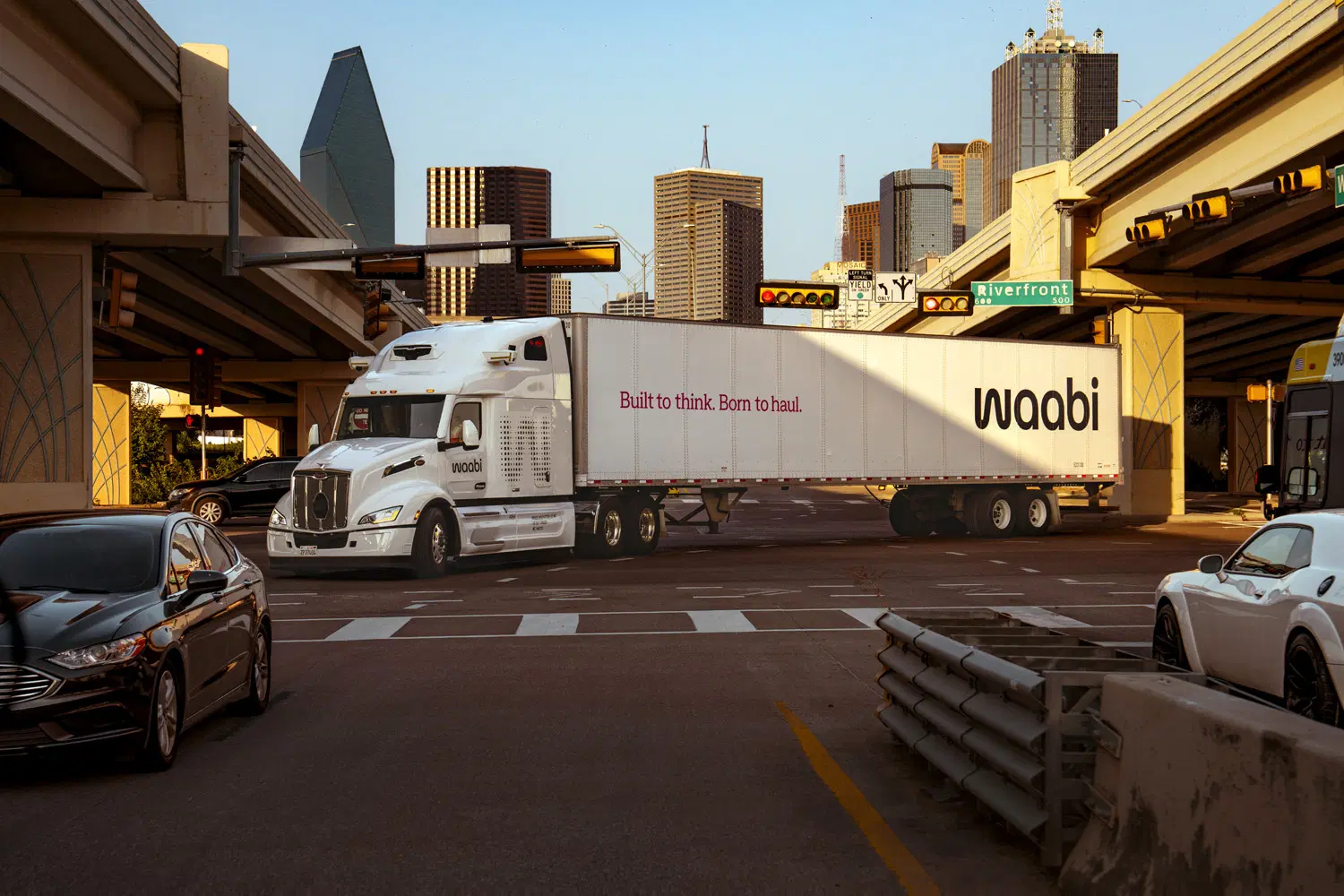
Waabi has been operating autonomous trucks commercially since 2023 in partnership with Uber Freight on routes between Dallas and Houston. While safety drivers have remained in vehicles during commercial operations, the company has developed the technical capabilities for fully driverless operation and planned to remove safety drivers by end of 2025. However, Urtasun acknowledged the company delayed full autonomy deployment to ensure safety standards met internal requirements.
The robotaxi market is intensely competitive. Alphabet’s Waymo aggressively expands beyond San Francisco into Phoenix, Los Angeles, Austin, Atlanta, and dozens of additional U.S. cities in 2026, plus international launches in London and Tokyo. Tesla operates limited robotaxi service in Austin using Full Self-Driving software. Chinese companies including WeRide and Apollo (Baidu) compete globally. Automakers including Rivian develop proprietary self-driving systems.
Waabi’s technology differentiates through its simulation-first approach and multi-sensor architecture using lidar, cameras, and radar rather than vision-only systems. The company emphasizes safety, claiming simulation training enables systems to handle edge cases and dangerous scenarios that would be impractical or unethical to test extensively on public roads with real vehicles.
Investors in Waabi’s Series C include Nvidia’s venture arm NVentures, Volvo Group Venture Capital, Porsche Automobil Holding, BlackRock, Radical Ventures, and a subsidiary of Abu Dhabi Investment Authority. This investor composition combines strategic automotive and technology partners with major financial institutions, providing both capital and potential go-to-market relationships.
Urtasun, formerly chief scientist at Uber’s Advanced Technologies Group and a computer science professor at University of Toronto, brings deep expertise in AI and autonomous systems. Her academic credentials and industry experience position Waabi as a technically sophisticated player in autonomous vehicle development.