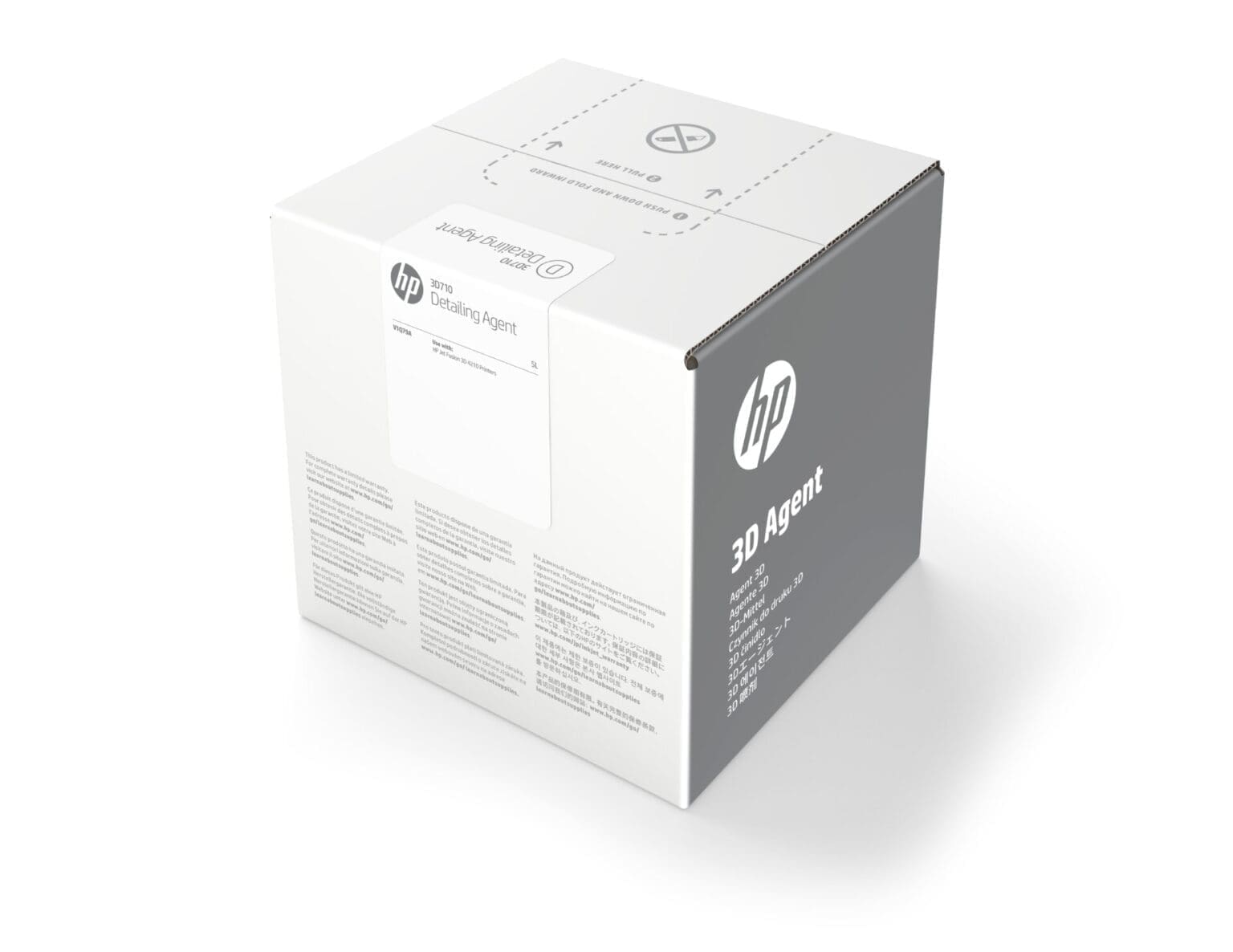
In advanced 3D printing technologies, particularly those utilizing powder-based systems like Multi Jet Fusion (MJF), the detailing agent plays a critical role in defining the resolution and surface finish of printed objects. This specialized agent is used to fine-tune the properties of boundary areas between the fused and unfused powder, sharpening details and improving the aesthetic and functional qualities of the final product. This article delves into the importance, functionality, and maintenance of the detailing agent within the 3D printing process, emphasizing its role in achieving superior precision and quality.
Importance of the Detailing Agent in 3D Printing
Enhanced Surface Resolution: Detailing agents are crucial for refining the final appearance of printed items, allowing for clearer definition at the edges and surfaces which directly impacts the visual and tactile quality of the product.
Improved Print Accuracy: By preventing the excess spread of fusing agents and controlling sintering behavior, detailing agents ensure that dimensions are faithfully reproduced according to digital designs.
Material Efficiency: Detailing agents help to minimize material wastage by more precisely defining printing areas, thus conserving valuable resources and reducing the need for post-processing.
Versatility in Applications: The ability to apply detailing agents in targeted areas allows for the creation of parts with variable textures and material properties within a single print cycle, enhancing the functionality of printed components.
Components Related to the Detailing Agent in 3D Printers
Application Mechanism: Typically includes inkjet printheads designed to deposit detailing agents with high precision. These mechanisms must be capable of accurate and repeatable performance to ensure consistent results.
Control Systems: Advanced software controls the deposition of the detailing agent, synchronizing it with the movements of other components in the printer to maintain accuracy and efficiency throughout the print process.
Heating Elements: These components work in conjunction with detailing agents to precisely control the thermal gradients during the sintering process, ensuring that detailing agents function optimally.
Cooling Systems: Regulate the temperature post-application to stabilize and set the detailing features, ensuring that the final attributes of the print are preserved.
Installation and Calibration of the Detailing Agent System
Proper Installation: Ensuring that the application mechanisms for the detailing agent are correctly installed and aligned is crucial for its effective deployment. This process includes integrating the printheads with the printer’s overall system architecture.
Calibration: Calibration of the detailing agent application system is essential to ensure that the agent is applied precisely where needed. This involves adjusting the printhead settings for flow rate, droplet size, and patterning accuracy.
Testing: Comprehensive testing must be performed to establish the optimal application rates and configurations for various materials and designs, ensuring the best possible outcome for each print job.
Maintenance and Optimization of the Detailing Agent System
Regular Cleaning: To prevent clogging and ensure smooth operation, the printheads and associated delivery systems need regular cleaning, especially when working with high-viscosity detailing agents.
System Checks: Routine inspections should be conducted to ensure that all components of the detailing agent system, including software and hardware, function seamlessly without errors or degradation.
Material Handling: Proper storage and handling of detailing agents are vital to maintain their efficacy and performance characteristics, as exposure to environmental factors can alter their properties.
Firmware and Software Updates: Keeping the system’s software and firmware updated can introduce enhancements that improve the precision and efficiency of detailing agent applications.
Challenges and Solutions
Application Precision: Achieving high precision in the application of detailing agents can be challenging, especially over large areas or complex geometries. Enhancing printhead technology and refining control algorithms are potential solutions.
Compatibility with Materials: Detailing agents must be compatible with the primary build materials and fusing agents to function correctly without causing adverse reactions. Extensive compatibility testing is essential when introducing new materials.
Health and Safety: Detailing agents, like many chemical components used in 3D printing, can pose health risks if not handled properly. Implementing strict safety protocols and using adequate ventilation are crucial.
The detailing agent is a vital component of modern powder-based 3D printing systems, significantly impacting the precision, efficiency, and aesthetic quality of printed products. Proper management and meticulous maintenance of the detailing agent system are essential for maximizing the capabilities of 3D printers and ensuring the production of high-quality, detailed, and functionally superior products. By thoroughly understanding and optimizing the function and maintenance of the detailing agent, manufacturers can achieve improved operational reliability and enhanced product quality, fully leveraging the advanced capabilities of 3D printing technology.