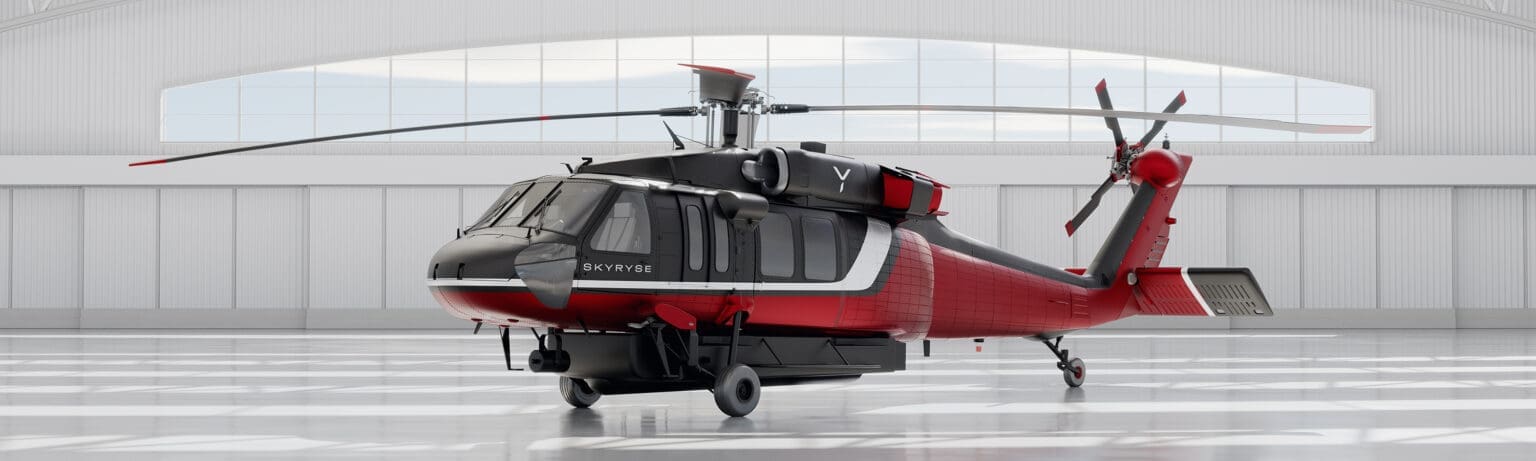
Skyryse, a California-based aviation technology company, announced on February 3, 2026, that it has raised $300 million in funding to scale its FAA-certified aviation operating system that simplifies aircraft operation and enables autonomous flight capabilities. The capital supports expansion of Skyryse’s platform across helicopter and fixed-wing aircraft while pursuing certification for increasingly autonomous flight modes.
The company’s technology addresses fundamental challenges in aviation: complexity of aircraft control requiring extensive pilot training, limited automation compared to other transportation modes, and safety risks from human error that contribute to majority of aviation accidents. Skyryse’s operating system provides a unified control interface replacing traditional mechanical flight controls with digital fly-by-wire systems and advanced automation.
The FAA certification represents crucial validation and market enabler. Aviation operates under strict regulatory frameworks where commercial aircraft systems must demonstrate safety and reliability through extensive testing and documentation. Skyryse has successfully navigated certification processes for initial system components, providing foundation for expanding automated capabilities through supplemental approvals.
The platform’s current capabilities include simplified control interfaces allowing pilots to operate aircraft through intuitive inputs rather than managing dozens of individual controls, automated stabilization preventing dangerous flight attitudes and recovering from pilot errors, integration of navigation, communication, and sensor data providing comprehensive situational awareness, and fault tolerance ensuring system failures don’t create catastrophic flight control loss.
The long-term vision extends to full autonomy where aircraft operate without pilots onboard. However, regulatory pathways to fully autonomous passenger aviation remain uncertain. Skyryse is pursuing incremental automation: first simplifying piloted operation, then introducing increasingly capable autopilot modes, then enabling remote pilot oversight, ultimately achieving full autonomy pending regulatory approval.
Market opportunity spans multiple aviation segments. Helicopter operations including emergency medical services, law enforcement, and executive transport face persistent pilot shortages and safety challenges where Skyryse’s automation could reduce training requirements and improve safety. Urban air mobility envisions thousands of electric vertical takeoff and landing aircraft providing intracity transportation, requiring automation to scale operations economically. General aviation includes thousands of small aircraft where simplified control interfaces could expand pilot population.
Competition includes established aerospace companies like Boeing, Airbus, and Lockheed Martin developing autonomous systems for military and commercial applications. Specialized aviation technology companies like Garmin and Honeywell provide avionics and automation components. Urban air mobility startups like Joby Aviation, Archer Aviation, and Lilium develop new aircraft with integrated automation.
Skyryse differentiates through focus on retrofitting existing aircraft rather than requiring entirely new airframes, FAA certification pathway validating approach with regulators, and platform strategy where single operating system spans multiple aircraft types creating economies of scale.
The $300 million funding will support several initiatives: expanding engineering teams developing advanced automation capabilities, pursuing additional FAA certifications for enhanced autonomous modes, scaling manufacturing and installation capacity for retrofit programs, building customer support infrastructure for aircraft operators, and conducting commercial demonstrations proving safety and economic benefits.
Customer segments include helicopter operators seeking safety improvements and pilot shortage solutions, aircraft manufacturers integrating Skyryse systems into new production, and ultimately urban air mobility services requiring autonomy for economic viability.
Risk factors include regulatory uncertainty around autonomous aviation timelines, competition from well-resourced aerospace incumbents, challenges scaling complex certification processes, and market adoption requiring operators to invest in retrofits or new aircraft.