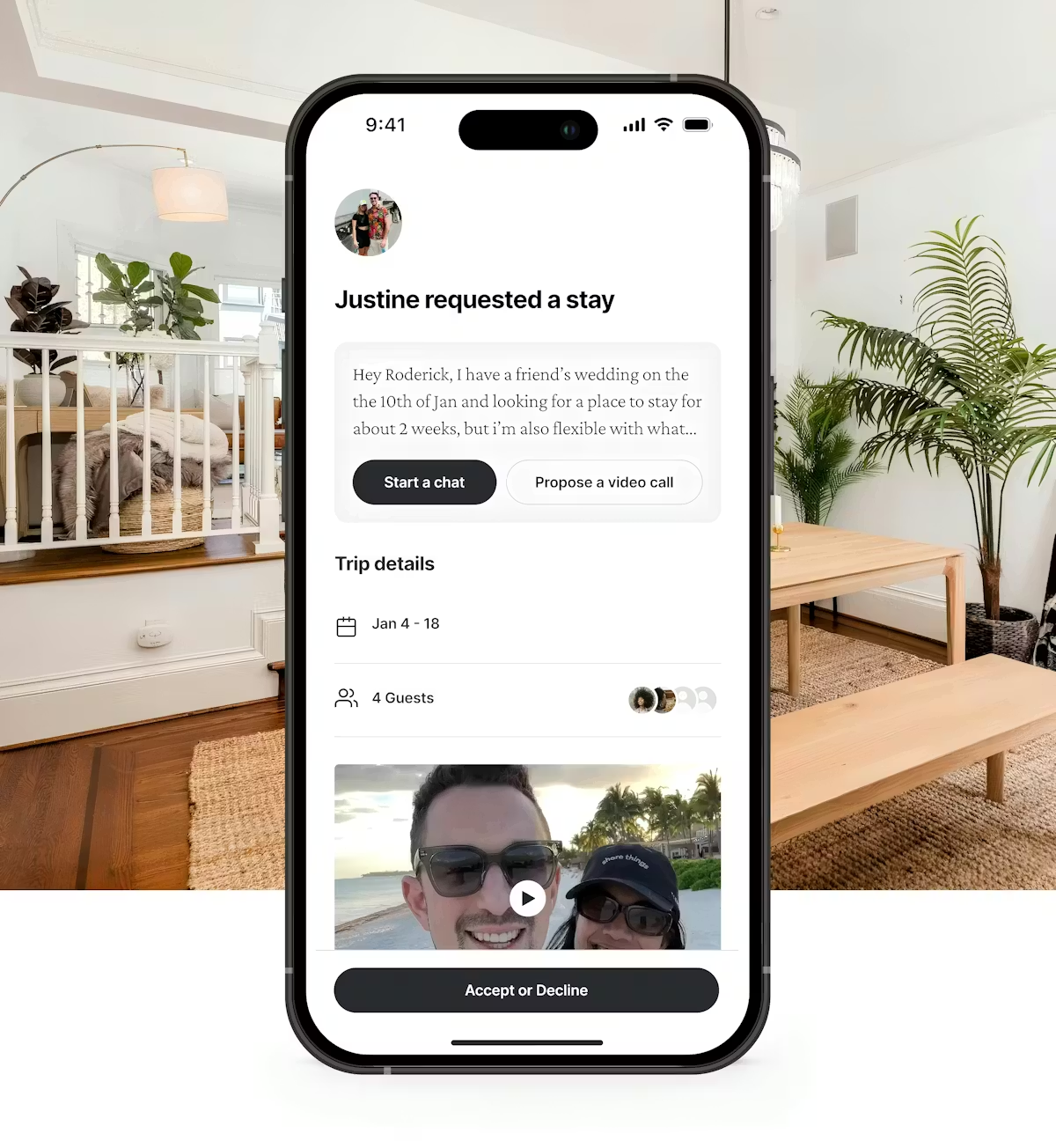

Kindred, a platform enabling peer-to-peer home exchanges through trusted networks, announced on February 3, 2026, that it has raised $125 million across a $40 million Series B co-led by NEA and Figma co-founder Dylan Field, plus an $85 million Series C led by Index Ventures. The funding supports expansion of Kindred’s community-driven alternative to hotels and short-term rentals where members swap homes with friends-of-friends for travel accommodation.
The concept leverages social trust to address persistent challenges in peer-to-peer accommodation. Traditional home sharing platforms like Airbnb rely primarily on reviews and identity verification to establish trust between strangers. Kindred takes different approach: members exchange homes with people connected through mutual friends, creating implicit trust based on social capital and reputational stakes within shared networks.
Kindred’s membership has grown to nearly 300,000 across 150+ cities as of early 2026, roughly doubling over the past year. This growth reflects increasing consumer interest in affordable travel alternatives amid persistent inflation in hotel prices and short-term rental costs. By exchanging homes directly rather than paying for accommodation, travelers eliminate major expense while experiencing destinations through local residences rather than tourist hotels.
The platform mechanics facilitate discovery and coordination. Members create profiles describing their homes, availability, and desired exchange locations. Kindred’s algorithm suggests potential matches based on property characteristics, timing, and social connections. Members negotiate terms directly, with Kindred providing messaging infrastructure, coordination tools, and trust verification confirming mutual friend connections.
Revenue model centers on membership fees rather than transaction percentages. This aligns incentives differently than platforms charging per booking: Kindred succeeds when members find valuable exchanges and remain active, not when they pay maximum prices or book maximum frequency. The membership model also creates predictable recurring revenue supporting long-term business planning.
Safety and quality control represent critical operational challenges. Unlike hotels with professional management and standardized quality, homes vary dramatically in condition, amenities, and cleanliness. Kindred implements several protective mechanisms including mandatory home photos and descriptions providing transparency about what members exchange into, community guidelines establishing minimum standards and behavioral expectations, dispute resolution processes for handling conflicts, and insurance coverage protecting against damages.
Market opportunity stems from several structural trends. First, travel demand remains robust with consumers prioritizing experiences over material goods. Second, accommodation costs represent major travel expense, creating incentive for alternatives. Third, remote work enables flexible travel timing, supporting home exchange where members have latitude coordinating availabilities. Fourth, sharing economy concepts have achieved mainstream acceptance, reducing friction adopting peer-to-peer models.
Competition comes from established home exchange platforms like HomeExchange and Love Home Swap that operate similar models with different trust mechanisms and membership structures. Traditional accommodation providers including hotels and Airbnb compete indirectly by offering convenience and reliability versus cost savings and authenticity. Travel clubs and membership organizations provide alternative frameworks for accessing accommodation benefits.
Kindred differentiates through emphasis on trusted networks and social connections rather than anonymous transactions, curated community fostering engagement beyond transactions, and product design emphasizing user experience and reducing coordination friction.
The $125 million funding will support product enhancement improving matching algorithms and coordination tools, safety and trust improvements addressing remaining barriers to adoption, marketing to accelerate membership growth and network effects, and geographic expansion into international markets where home exchange concepts have less established presence.
Success depends on achieving sufficient network density where members reliably find suitable exchange partners in desired destinations, maintaining community quality and trust as membership scales, and converting occasional users to active exchangers generating sustainable membership retention.