Introduction
You have spent years developing business acumen, understanding customer needs, analyzing market trends, and making strategic recommendations. Perhaps you work as a business analyst, consultant, product manager, or in marketing, finance, or operations. Throughout your career, you have encountered data repeatedly, using spreadsheets to analyze trends, creating reports to inform decisions, and drawing insights from business metrics. Increasingly, you find yourself drawn to the technical side of data analysis, curious about machine learning, and wondering whether you could transition into data science.
The prospect of moving from a business role to a technical field like data science might feel daunting. You may worry that your lack of programming experience or mathematical background creates insurmountable barriers. You might look at data science job descriptions filled with requirements for Python, statistics, and machine learning algorithms and wonder whether someone from a business background could ever qualify.
The reality is far more encouraging than you might expect. Business professionals who transition to data science bring invaluable perspectives that purely technical candidates often lack. You understand how organizations make decisions, what questions matter to stakeholders, and how to translate analytical insights into business value. These capabilities are remarkably difficult to teach and increasingly recognized as essential for effective data science work.
Moreover, the technical skills you need to develop, while requiring dedicated effort, are entirely learnable. Thousands of people with business backgrounds have successfully transitioned to data science careers by following structured learning paths and building their capabilities systematically. The combination of business understanding and technical skills creates a powerful profile that many organizations actively seek.
In this comprehensive guide, you will learn how to leverage your business background as you transition into data science. We will explore what makes business professionals uniquely valuable in data science roles, what technical skills you need to develop, how to structure your learning journey, strategies for building a compelling portfolio despite limited technical experience, and practical approaches to navigating the job search. By understanding both the challenges and advantages of your position, you can create a realistic transition plan that builds on your strengths while systematically developing new capabilities.
Understanding Your Unique Position
Before diving into the technical skills you need to learn, it is important to recognize the distinctive advantages you bring to data science from your business background. Understanding these strengths helps you position yourself effectively and provides confidence as you navigate the transition.
Your business acumen represents perhaps your most significant advantage. Data science exists to drive business value, yet many technically skilled data scientists struggle to connect their analyses to business outcomes. You already understand profit margins, customer lifetime value, market dynamics, and competitive positioning. When you analyze customer churn data, you instinctively think about retention costs and revenue impact. When you examine conversion rates, you connect them to customer acquisition expenses and growth targets. This business thinking transforms data analysis from an academic exercise into a decision-making tool.
Consider how a purely technical data scientist might approach analyzing customer behavior. They might build a sophisticated model predicting which customers will make purchases, achieve impressive accuracy metrics, and present their results focused on technical performance. You, coming from a business background, would naturally ask different questions. Which customer segments are most profitable to target? What is the cost of reaching each segment compared to the expected revenue? How does this analysis change our marketing budget allocation? These business-framed questions make analysis actionable and valuable.
Your stakeholder communication skills are equally valuable. Throughout your business career, you have explained complex ideas to colleagues who may not share your expertise. You create presentations for executives who need high-level insights without technical details. You write reports that persuade skeptical stakeholders. You facilitate meetings where you help diverse groups reach consensus. These communication capabilities are essential in data science, where technical insights must be translated into recommendations that non-technical decision-makers can understand and act upon.
Many technically brilliant data scientists struggle with this translation. They can explain gradient descent or cross-validation to other data scientists but fail to communicate the business implications of their findings to executives. Your ability to bridge this gap makes you valuable even if your technical skills are still developing.
Your understanding of business processes and systems provides context that improves your analytical work. If you have worked in operations, you understand inventory management, supply chain dynamics, and process optimization. If you come from marketing, you know customer segmentation, campaign performance metrics, and brand positioning. If you have finance experience, you understand financial modeling, risk assessment, and capital allocation. This domain expertise helps you ask better questions, design more relevant analyses, and interpret results in context.
When you analyze sales data, you understand the seasonal patterns in different product categories because you have lived through quarterly cycles and holiday rushes. When you examine operational metrics, you recognize when unusual values reflect real business events rather than data errors. This contextual knowledge, gained through experience rather than study, proves difficult for outsiders to acquire and adds genuine value to your analytical work.
Your practical problem-solving approach shapes how you tackle analytical challenges. In business roles, you have learned to work with imperfect information, make decisions under uncertainty, and deliver results within constraints. You know that the perfect analysis delivered too late provides less value than a good analysis delivered when decisions need to be made. This pragmatic mindset serves you well in data science, where endless pursuit of marginal accuracy improvements can prevent deployment of valuable solutions.
You have developed skills in requirements gathering and problem framing through your business work. When a stakeholder requests analysis, you know how to probe deeper to understand their underlying needs. You ask about the decisions the analysis will inform, the timeline for those decisions, and what level of precision is required. This ability to translate vague requests into well-defined analytical problems is crucial and surprisingly rare.
Your project management and organizational skills transfer directly to data science work. You know how to break large projects into manageable pieces, track progress, manage timelines, and coordinate with multiple stakeholders. These capabilities help you execute data science projects efficiently, especially in organizations where data scientists work independently or lead their own initiatives.
Finally, your business network and relationships provide access and context that purely technical candidates lack. If you are transitioning within your current organization, you already know key stakeholders, understand political dynamics, and have established credibility. These relationships can accelerate your transition by providing opportunities to work on analytical projects and access to mentors who can guide your learning.
Understanding these advantages helps you see that your business background is an asset rather than a liability. The challenge is not overcoming your business experience but rather complementing it with technical skills to create a powerful combination.
The Technical Skills Gap and How to Bridge It
While your business background provides substantial advantages, transitioning to data science requires developing technical capabilities that may be entirely new to you. Understanding what you need to learn and why it matters helps you create an efficient learning path.
Programming forms the foundation of modern data science work. Unlike business analysis that relies heavily on spreadsheet tools, data science requires writing code to manipulate data, build models, and create automated analyses. Python has emerged as the dominant language for data science, though R remains popular in certain domains, particularly statistics-heavy fields and academic research.
For someone without programming experience, learning to code represents the steepest initial climb. Programming requires thinking in a fundamentally different way than you may be accustomed to. You need to break problems into logical steps, express those steps in precise syntax that computers can execute, and debug code when it does not work as intended. This skill develops through practice rather than passive reading, and it requires patience as you work through initial frustration.
The good news is that programming for data science differs from software engineering. You do not need to understand computer architecture, complex algorithms, or software design patterns. Instead, you need to become comfortable with basic programming concepts like variables, loops, and functions, then learn to use specialized libraries for data analysis. This narrower focus makes the learning process more manageable than becoming a general-purpose programmer.
Statistics and probability theory provide the mathematical foundation for understanding data and making inferences. In business roles, you may have used basic statistics like averages, percentages, and growth rates. Data science requires deeper statistical knowledge to understand when patterns are meaningful versus random noise, how to quantify uncertainty in predictions, and what conclusions can be validly drawn from data.
Key statistical concepts you need to develop include understanding probability distributions and what they reveal about data, hypothesis testing and statistical significance, confidence intervals and margin of error, correlation versus causation, and sampling methods and their implications. These concepts transform you from someone who can calculate averages to someone who can rigorously evaluate whether observed differences are meaningful.
Statistics may feel intimidating if you struggled with mathematics in school, but learning statistics for practical application differs significantly from theoretical mathematics courses. Modern statistics education emphasizes intuition and application using real data and computational tools. You can develop strong statistical reasoning without mastering complex mathematical proofs.
Machine learning algorithms represent the core technical tools of data science. These algorithms learn patterns from data and use those patterns to make predictions or decisions. You need to understand the major algorithm families, when each is appropriate, how to apply them, and how to evaluate their performance.
This includes supervised learning algorithms for making predictions from labeled examples, such as predicting customer churn or categorizing support tickets. It includes unsupervised learning methods for finding patterns in data without predefined labels, such as customer segmentation or anomaly detection. And it includes understanding how to assess model quality, avoid overfitting, and select appropriate algorithms for different problems.
Learning machine learning from a business background has both advantages and challenges. The advantage is that you can immediately connect techniques to business applications, making the material more engaging and memorable. The challenge is that machine learning relies on mathematical concepts that may be unfamiliar, requiring patience as you build understanding.
Data manipulation and analysis skills using tools like Python’s pandas library become daily necessities. Real-world data is messy, incomplete, and stored in formats that require substantial transformation before analysis. You need to learn how to load data from various sources, clean and preprocess it by handling missing values and inconsistencies, reshape and aggregate data to answer specific questions, merge different datasets together, and create summary statistics and visualizations.
These data wrangling skills consume a surprisingly large portion of data science work. Developing facility with data manipulation through practice with real datasets builds the muscle memory that makes you efficient.
SQL database querying allows you to extract data from the systems where it lives. Most business data resides in databases rather than spreadsheet files, and accessing it requires SQL knowledge. While you may have used business intelligence tools that generate SQL automatically, data science work often requires writing custom queries to extract exactly the data you need.
Learning SQL is relatively accessible for business professionals because it connects clearly to business questions. A query to find top customers by revenue translates naturally into SQL syntax. The structured nature of SQL makes it more approachable than general programming languages.
Data visualization and communication using libraries like matplotlib and seaborn helps you create compelling charts and graphics. While you may have created charts in Excel or PowerPoint, data science visualization requires programmatically generating publication-quality graphics and creating interactive visualizations that allow exploration. Good visualization design combines technical implementation with design principles about color, layout, and clarity.
Mathematics including linear algebra and calculus supports understanding of how machine learning algorithms work internally. While you can use machine learning algorithms as black boxes without understanding their mathematical foundations, developing some mathematical intuition helps you make better choices, debug problems, and move beyond basic applications.
The level of mathematics required depends on your goals. For practical data science work focused on applying techniques to business problems, you need enough mathematics to understand what algorithms do and when they apply. For research-oriented or highly technical roles, deeper mathematical knowledge becomes important. Most business professionals transitioning to data science aim for the former and can develop mathematical understanding gradually as needed.
Creating Your Learning Strategy
With clarity about what you need to learn, the next step is creating a realistic learning plan that accounts for your starting point and fits your life circumstances. The key is building skills systematically rather than jumping randomly between topics or feeling overwhelmed by the breadth of data science.
Start with programming fundamentals before attempting data science-specific topics. Learning programming requires building basic literacy in code. Begin with the absolute basics of Python, including understanding variables that store data, data types like numbers and text, basic operations like addition and comparison, print statements to see results, and simple conditional logic using if statements. These fundamentals seem elementary but provide the foundation for everything that follows.
For business professionals new to programming, the initial learning curve feels steep because programming requires precise thinking that differs from natural language communication. A computer does exactly what you tell it, no more and no less. Debugging why code does not work requires methodical reasoning. Give yourself permission to struggle with early programming exercises, as this struggle is normal and productive. Everyone who programs well today went through this phase.
Choose learning resources designed for beginners without programming backgrounds. Resources like “Python for Everybody” or “Automate the Boring Stuff with Python” start from true zero and build gradually. Avoid resources that assume programming experience even if they claim to be beginner-friendly, as these create unnecessary frustration.
Practice coding daily even if only for thirty minutes. Programming is a skill learned through doing, not watching or reading. Work through exercises systematically, typing code yourself rather than copying and pasting. When code does not work, resist the urge to immediately look up the answer. Spend time debugging, as this struggle builds problem-solving skills essential for data science.
Once you have basic Python comfort, move to data analysis with pandas. Pandas is a library that brings spreadsheet-like functionality to Python, making it familiar yet more powerful than Excel. Learning pandas involves understanding DataFrames as the fundamental data structure, similar to spreadsheet tables but more flexible. You learn to select specific rows or columns, filter data based on conditions, create calculated columns, group and aggregate data to compute summaries, and handle missing values appropriately.
Coming from business analysis, pandas will feel both familiar and foreign. The concepts resemble Excel operations you know, but the syntax and approach differ. Embrace this learning phase, working through tutorials with real datasets. Practice converting Excel-based analyses you have done into pandas code, which reinforces learning and demonstrates progress.
Build statistical knowledge in parallel with programming skills. Statistics requires less hands-on practice than programming but needs conceptual understanding. Start with descriptive statistics including measures of central tendency like mean and median, measures of spread like standard deviation, and data visualization to understand distributions. Progress to probability concepts including basic probability rules, common probability distributions, and random variables.
Move into inferential statistics including hypothesis testing to determine if effects are real or chance, confidence intervals to quantify uncertainty, and p-values and their interpretation. These concepts become clearer when you apply them to real data using Python rather than learning them abstractly.
For business professionals, learning statistics often involves unlearning misconceptions. You may have heard about statistical significance without truly understanding it, or confused correlation with causation. Approach statistics with a learner’s mindset, willing to examine your assumptions.
Many excellent resources exist for learning statistics with minimal mathematics. Books like “Statistics Done Wrong” or “Naked Statistics” build intuition through examples and clear explanations. Online courses from Coursera or Khan Academy provide structured learning with exercises. The key is choosing resources that emphasize understanding over formula memorization.
Introduce machine learning once you have programming and statistics fundamentals in place. Machine learning builds on these foundations, and attempting it too early leads to confusion. Start with the machine learning workflow including defining a problem, preparing data, splitting data into training and testing sets, choosing and training a model, evaluating performance, and deploying the model.
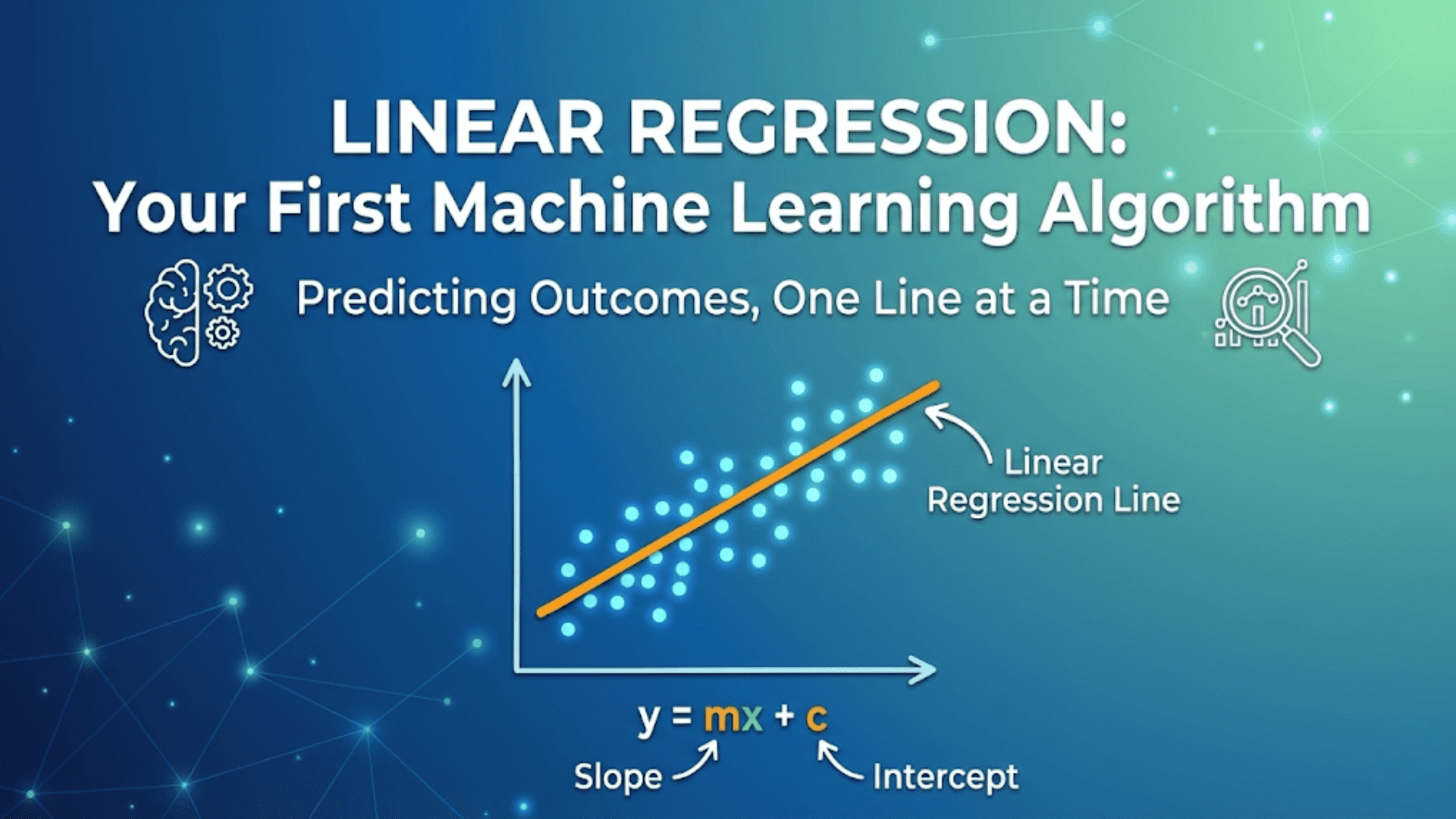
Begin with supervised learning and simple algorithms like linear regression for predicting continuous values and logistic regression for binary classification. These foundational algorithms are relatively simple to understand and widely applicable. Work through complete examples where you apply these algorithms to real datasets and evaluate results.
Progress to more sophisticated algorithms including decision trees and random forests, gradient boosting methods like XGBoost, and support vector machines. For each algorithm, focus on understanding when it works well, what assumptions it makes, and how to tune it effectively. Avoid getting lost in mathematical details initially, focusing instead on practical application.
Learn through projects that mirror real business problems. If you have marketing background, build a customer segmentation model or analyze campaign effectiveness. If you come from finance, create a fraud detection model or forecast financial metrics. If you have operations experience, optimize resource allocation or predict equipment failures. Connecting learning to familiar domains makes it more engaging and meaningful.
Structure your time realistically given your other commitments. If you work full-time while learning, you might dedicate one to two hours daily to studying, with longer sessions on weekends. This sustained effort over six to twelve months builds substantial capability. Consistency matters more than intensity. Daily practice, even if brief, proves more effective than sporadic marathon sessions.
Join structured programs if you benefit from external accountability and community. Bootcamps provide intensive, focused learning with instructor support and peer interaction. Online courses from Coursera, edX, or DataCamp offer flexible learning paths with video lessons, exercises, and projects. University programs including online master’s degrees provide rigorous education with recognized credentials. Each option has tradeoffs in cost, time commitment, and flexibility.
Alternatively, many people successfully self-study using free resources, following structured curricula they design for themselves. This approach requires discipline but costs little and allows complete flexibility. The key is creating structure for yourself rather than randomly following whatever seems interesting.
Connect with other learners for support and accountability. Join online communities focused on learning data science, participate in local meetups where people discuss data science topics, or form a study group with others making similar transitions. Learning with others provides motivation during difficult periods, exposes you to different perspectives, and creates networking opportunities.
Building Your Data Science Portfolio
Creating a portfolio that demonstrates your data science capabilities presents unique challenges when transitioning from a business background. You lack the years of technical work that career data scientists point to, but you can create compelling portfolio projects that showcase both emerging technical skills and strong business thinking.
Choose portfolio projects that solve real business problems rather than working through canned tutorials. Every data scientist has completed the Titanic survival prediction or Iris flower classification. These exercises help you learn but do not differentiate your portfolio. Instead, select problems that demonstrate business understanding and analytical creativity.
Consider projects that address challenges from your industry experience. If you worked in retail, analyze customer purchase patterns to identify opportunities for product recommendations or promotion timing. If you have healthcare background, examine patient outcomes to identify factors associated with better results. If you know e-commerce, analyze user behavior to reduce cart abandonment. These domain-focused projects leverage your business knowledge while demonstrating technical skills.
Frame each project from a business perspective. Start your project documentation by explaining the business problem you address, why it matters to organizations, and what decisions your analysis could inform. This framing immediately differentiates your work from technically-focused projects that ignore business context. A hiring manager reviewing your portfolio should immediately understand not just what you did technically but why it matters commercially.
For example, rather than introducing a project as “I built a classification model to predict customer churn,” frame it as “Customer acquisition costs five times more than customer retention, but most companies cannot identify at-risk customers until they have already left. This project develops an early warning system that identifies customers likely to churn two months before they cancel, giving the retention team time to intervene with targeted offers. The model analyzes customer behavior patterns, support interactions, and engagement metrics to flag customers for outreach.”
Document your analytical process thoroughly in your portfolio projects. Show how you explored the data initially to understand its characteristics, what hypotheses you formed about relationships in the data, how you cleaned and prepared data for analysis, what features you engineered and why, which models you experimented with and how you chose among them, and how you validated that your solution actually works. This documentation reveals your analytical thinking process, which often impresses employers more than the final model you build.
Include extensive data exploration and visualization in your projects. Business stakeholders need to understand data before trusting model predictions. Showing that you explore data visually, identify patterns and outliers, and validate your assumptions demonstrates thoroughness. Create clear, well-labeled visualizations that communicate insights effectively. This emphasis on exploratory analysis and communication aligns with real data science work and showcases skills that technically-focused candidates may neglect.
Explain your feature engineering decisions in detail. Feature engineering, the process of creating useful input variables from raw data, requires both technical skill and domain knowledge. Your business background helps you engineer features that capture meaningful business concepts. Document what features you created, what business intuition motivated each feature, and how features impacted model performance. This demonstrates that you think beyond applying algorithms to creating representations of data that enable learning.
Compare multiple modeling approaches in each project. Build a simple baseline model using basic methods, then progressively try more sophisticated approaches. Explain why you chose particular algorithms, what you expected their strengths and weaknesses to be, and what you actually observed. This comparison shows you understand different techniques and can make informed choices rather than blindly applying complex algorithms.
Present results in business terms alongside technical metrics. Report model accuracy or error rates, but more importantly, translate these metrics into business impact. If your churn prediction model achieves eighty-five percent recall, explain that this means the retention team can reach eighty-five percent of customers who would otherwise leave, potentially saving specific dollar amounts in lost revenue. If your demand forecast reduces inventory costs, quantify the expected savings. This business translation demonstrates your ability to connect technical work to organizational value.
Discuss limitations and next steps honestly in your projects. No analysis is perfect, and acknowledging limitations shows maturity. Explain where your model might fail, what data you wish you had, or how the solution could be improved with additional time. Suggest concrete next steps for extending the work. This critical thinking demonstrates you understand the scope and boundaries of your analyses.
Create polished, professional documentation for each project. Write README files that explain the project clearly, include visualizations that illustrate key findings, organize code logically with clear comments, and provide instructions for running your analysis. The presentation quality signals attention to detail and professionalism.
Consider building projects in Jupyter notebooks that combine code, visualizations, and explanatory text. Notebooks excel at telling analytical stories, walking readers through your thinking process while showing the code that implements it. This format suits business-oriented projects particularly well because it emphasizes narrative and communication alongside technical implementation.
Aim for three to five substantial portfolio projects that demonstrate different capabilities. One project might focus on prediction, another on clustering and segmentation, and another on time series forecasting. This variety shows breadth in your developing skill set. Quality matters far more than quantity. Fewer polished, well-documented projects make stronger impressions than many rushed, poorly explained ones.
If you can contribute to real projects at your current organization while learning, these real-world applications become powerful portfolio pieces. Even small analytical projects that informed actual business decisions demonstrate practical impact. Document these projects carefully, being mindful of confidentiality and obtaining permission to share the work if relevant details are not public.
Leveraging Your Business Network
Your existing professional network represents a significant advantage in your transition to data science. While building technical skills requires individual effort, navigating career opportunities benefits enormously from relationships and connections. Strategic networking accelerates your transition and opens doors that might otherwise remain closed.
Start by examining your current organization for data science opportunities. Many companies have analytics teams, data science functions, or business intelligence groups that might offer transition pathways. These internal transitions prove easier than external job searches because you already understand the business, have established credibility, and know key stakeholders. Your manager and colleagues can provide support if they understand your career goals.
Schedule conversations with data scientists or analysts in your organization to learn about their work. Ask about their career paths, what they work on daily, what skills they find most valuable, and what advice they have for someone transitioning from business roles. These conversations build relationships while providing realistic information about data science work.
Explore whether you can gradually take on more analytical projects in your current role. If you work in marketing, propose testing new targeting strategies using customer data. If you are in operations, suggest analyzing process efficiency metrics to identify improvement opportunities. These projects provide practical experience, demonstrate your growing capabilities, and create portfolio pieces. They also show your manager that your interest in data science is serious and potentially beneficial to the organization.
Some companies offer internal mobility programs, rotations, or development opportunities that could facilitate your transition. A temporary assignment to an analytics team while maintaining your current role provides invaluable learning opportunity and a trial period to confirm you enjoy data science work. Advocate for such opportunities if they exist or propose creating them if they do not.
Attend company tech talks, data science presentations, or analytics team meetings if they are open to broader attendance. These gatherings expose you to how data science is actually practiced in your organization and help you meet people working in the field. Active participation in discussions demonstrates your interest and growing knowledge.
Beyond your current organization, leverage industry connections and professional networks. Reach out to former colleagues who work in data science roles or analytics-focused companies. These warm connections are far more valuable than cold applications. Most people are willing to help former colleagues and may know about opportunities not publicly posted.
Participate actively in professional organizations and industry groups related to your field. If you work in healthcare, attend healthcare analytics conferences. If you are in finance, join financial data science meetups. These domain-specific communities value business expertise combined with analytical skills, making them excellent networking venues for business professionals transitioning to data science.
Use LinkedIn strategically to signal your transition and connect with data science professionals. Update your profile to include data science courses you have completed, skills you are developing, and projects you are building. Share articles about data science applications in your industry, comment thoughtfully on posts from data scientists you admire, and write posts about your learning journey. This visible activity makes you discoverable to recruiters and establishes your commitment to the transition.
Engage with the broader data science community beyond your immediate network. Attend local data science meetups, which exist in most cities and welcome people at all skill levels. These gatherings provide opportunities to hear about real projects, ask questions, and meet practitioners. Introduce yourself as someone transitioning from business roles, as this often sparks interesting conversations.
Participate in online communities focused on data science learning. Forums like the fast.ai community, Reddit’s data science subreddit, or Cross Validated on Stack Exchange bring together people learning and practicing data science. Ask questions about concepts you find challenging, share resources you find helpful, and offer perspectives from your business background when relevant. Consistent participation builds reputation and connections.
Consider finding a mentor who can guide your transition. Formal mentorship programs exist through some professional organizations, but informal mentorship often develops through networking and building relationships. Look for someone whose career path you admire and who has time to occasionally discuss your progress and provide advice. Mentors can review your portfolio projects, suggest learning resources, and introduce you to opportunities.
Offer value in your networking rather than only asking for help. Share insights from your business experience that might benefit data scientists you meet. Introduce connections that could be mutually beneficial. Provide feedback on someone’s project or presentation. This generosity builds genuine relationships that often lead to unexpected opportunities.
Be strategic about informational interviews. When you request time with someone working in data science, prepare specific questions that show you have done research. Ask about their career journey, what surprised them about data science work, what skills they wish they had developed earlier, or what they look for when hiring. These focused conversations provide valuable insights and make strong impressions.
Maintain relationships over time rather than networking only when job searching. Stay in touch with contacts through occasional messages about interesting articles, congratulations on their achievements, or updates about your progress. These ongoing relationships feel more authentic and prove more valuable than transactional networking.
Remember that your business network remains valuable even as you build data science connections. Former colleagues and business contacts may know about companies seeking to build data capabilities and appreciate candidates who understand both business and analytics. Your dual perspective can be precisely what certain organizations need.
Navigating the Job Search Process
When you feel ready to pursue data science roles, your job search strategy should leverage your unique position as a business professional with developing technical skills. This requires thoughtful positioning and targeting of opportunities where your background provides distinctive value.
Focus initially on roles that explicitly value business understanding alongside technical skills. Position titles like “business data scientist,” “commercial analyst,” “analytics consultant,” or “data scientist” at companies in your industry often indicate roles where business acumen is prized. These positions may emphasize translating business problems into analytical approaches, communicating findings to stakeholders, or working closely with business teams, all areas where your background gives you advantages.
Target companies and industries where you have domain expertise. If you worked in retail, pursue data science roles at retail companies or consulting firms serving retail clients. If you have healthcare experience, focus on health analytics positions. Your industry knowledge reduces the learning curve and makes you valuable faster than candidates who need to learn both data science and the domain simultaneously.
Consider analytics consulting roles at firms that serve your industry. Consulting positions often value business backgrounds because client communication and problem framing are critical. These roles provide exposure to diverse problems and industries while building your data science experience. Consulting firms often invest in training and may be more open to candidates with strong business skills and developing technical capabilities.
Look for opportunities at companies building data science capabilities rather than those with mature data science teams. Organizations in early stages of data science adoption often need people who can bridge business and technical domains. They may value your business credibility and communication skills as much as technical depth. These roles often involve education and change management alongside analysis, playing to your business strengths.
Tailor your resume to emphasize transferable skills while clearly showing commitment to data science. Lead with your business experience but frame it to highlight analytical work, data-driven decision making, and quantitative problem solving. Include a prominent section on data science skills and projects, listing courses you have completed, technical skills you have developed, and portfolio projects with brief descriptions.
Your resume summary should explicitly address your transition. Something like “Business analyst with seven years of experience driving data-driven decision making in retail, currently transitioning to data science with focus on customer analytics and predictive modeling. Completed comprehensive data science training including statistics, machine learning, and Python programming. Seeking to leverage business acumen and technical skills to deliver impactful analytical solutions.”
In job applications, your cover letter becomes especially important. Use it to tell your story compellingly. Explain what drew you to data science, how you have systematically built technical capabilities, and why your business background makes you valuable for the specific role. Connect your past experience directly to the job requirements, showing how your domain knowledge, stakeholder communication skills, and analytical thinking prepare you for success.
Prepare for interviews that will probe both your technical knowledge and business judgment. Expect questions about statistics, machine learning algorithms, data manipulation, and programming. Study common data science interview questions and practice explaining concepts clearly. Use resources like “Introduction to Statistical Learning” or “Cracking the Data Science Interview” to prepare.
Also prepare for business case questions where you propose analytical approaches to business problems. These questions assess your ability to translate business challenges into data science solutions. Practice breaking down vague business questions into well-defined analytical problems. For example, if asked “How would you reduce customer churn,” walk through understanding what data is available, what features might predict churn, how you would validate a model, and how the organization would use predictions.
Be honest about your technical level in interviews while confidently presenting your strengths. Acknowledge that you are still developing certain technical skills while emphasizing your strong foundation and commitment to continuous learning. Highlight your business understanding, communication abilities, and practical problem-solving approach. Position yourself as someone who can deliver value immediately through business insights while growing technical capabilities.
Prepare portfolio project presentations that you can walk through during interviews. Be ready to explain your analytical process, the business problem you addressed, technical approaches you tried, why you made specific decisions, results you achieved, and limitations you recognized. Practice these presentations until you can deliver them naturally and answer detailed questions about your work.
Consider starting with contract work or part-time projects to build experience while maintaining income security. Freelancing platforms increasingly connect data science clients with practitioners for short-term projects. Taking on smaller engagements builds your track record and may lead to full-time opportunities. Some companies hire contractors as a trial period before making full-time offers.
Be patient and persistent through the job search. Career transitions take time, and you will face rejections, especially early on. Each interview provides learning opportunities and helps you refine your approach. Use feedback to improve your skills, portfolio, and interviewing technique. The job search itself becomes a learning process.
Network your way into opportunities whenever possible. Applications submitted through referrals receive far more attention than those through general job postings. Leverage every connection and conversation to learn about openings and request introductions. Many successful transitions happen through personal connections rather than formal application processes.
Consider whether staying at your current organization provides a viable path. Internal transitions often require less extensive technical credentials than external hires because you have established trust and understanding of the business. An internal move to an analytics team might provide the data science experience that qualifies you for external opportunities later.
Overcoming Common Challenges
Business professionals transitioning to data science encounter predictable challenges. Recognizing these obstacles and having strategies to address them helps you navigate the transition more smoothly.
Imposter syndrome affects nearly everyone changing careers, but it strikes particularly hard when moving from an area of competence to one where you feel like a novice. You may feel intimidated by data scientists with computer science degrees or years of technical experience. Remember that you bring valuable skills they likely lack. Your business acumen, communication abilities, and domain expertise complement technical skills. Focus on your unique value rather than comparing yourself to people with different backgrounds.
The mathematical learning curve presents challenges for many business professionals. If you struggled with math in school or avoided it in your career, suddenly facing statistics and linear algebra can feel overwhelming. Remember that learning mathematics for practical application differs dramatically from theoretical mathematics courses. Modern resources emphasize intuition and application using real examples. You do not need to become a mathematician. You need to understand concepts well enough to apply them correctly and recognize their limitations.
When you encounter mathematical concepts that feel difficult, break them into smaller pieces. Seek out multiple explanations from different sources, as different presentations resonate with different learners. Work through concrete examples with real numbers rather than dwelling on abstract formulas. The mathematics becomes clearer when connected to practical applications.
Programming frustration is normal for beginners. You will write code that does not work, encounter cryptic error messages, and spend hours debugging simple problems. This struggle is part of learning, not a sign that you lack aptitude. Every programmer has experienced this frustration. Persistence through early difficulties builds competence that eventually makes programming feel natural.
When stuck on programming problems, practice systematic debugging. Read error messages carefully for clues about what went wrong. Add print statements to understand what your code is actually doing. Search for similar problems online, as you are rarely the first person to encounter a particular error. Ask for help in online communities when truly stuck, but make genuine attempts to solve problems first.
Time management becomes challenging when learning technical skills while working full-time. You have limited hours for study, and progress feels slow. Set realistic expectations about pace. Learning data science while employed typically takes a year or more. This is normal and acceptable. Consistency matters more than intensity. Regular practice, even in small amounts, builds skills steadily.
Create a structured schedule that protects learning time. Treat study sessions as important commitments rather than optional activities that get displaced by other demands. Find times when you are mentally fresh rather than trying to study when exhausted. Morning hours before work often prove more productive than late evenings after long days.
Balancing breadth and depth creates tension. Data science encompasses many topics, and you could spend months diving deep into statistics or machine learning alone. However, you also need exposure to multiple areas to become well-rounded. Strike a balance by building foundational knowledge across core areas before specializing. Develop enough depth in each topic to apply it competently while recognizing that deeper expertise develops over time through practice.
Financial considerations affect many career transitions. You may need to accept a lower salary initially when moving from an experienced business role to a junior or mid-level data science position. View this as an investment in long-term career growth. Data science salaries increase rapidly with experience, and the long-term earning potential often exceeds business roles. Consider your financial runway and plan accordingly.
Rejection and setbacks are inevitable during career transitions. You will apply for jobs you do not get, face questions you cannot answer in interviews, or struggle with technical concepts. These setbacks do not mean you should give up. They are normal parts of the journey. Learn from each experience, adjust your approach, and keep moving forward. Persistence distinguishes successful career changers from those who give up prematurely.
Doubt about whether you made the right choice may surface, especially during difficult periods. Question whether you should have stayed in your business career or whether data science is truly right for you. These doubts are normal when facing challenges in unfamiliar territory. Remind yourself why you wanted to make this transition. Reflect on progress you have made rather than focusing only on what remains to learn. Talk with others who have made similar transitions to gain perspective.
The key to overcoming these challenges is maintaining realistic expectations, celebrating incremental progress, seeking support from communities and mentors, being kind to yourself when learning feels difficult, and keeping focus on long-term goals during temporary setbacks. Career transitions require resilience, but thousands of business professionals have successfully navigated this path before you.
Success Stories and Role Models
Learning about others who have successfully transitioned from business to data science provides both inspiration and practical insights. While every journey is unique, common patterns emerge in successful transitions.
Many successful data scientists started in business analyst roles where they worked extensively with data but lacked advanced technical skills. They gradually expanded their capabilities by taking on increasingly analytical projects, learning SQL and Excel deeply before moving to Python, and eventually building machine learning models to solve business problems. These incremental transitions allowed them to develop skills while maintaining employment and credibility.
Others made more dramatic shifts, leaving business careers to attend intensive data science bootcamps or pursue master’s degrees in data science or analytics. These structured programs provided comprehensive technical training, portfolio projects, and career support that facilitated transitions. While requiring significant time and financial investment, structured programs accelerated learning and provided credentials that helped in job searches.
Some business professionals transitioned by finding companies that valued their unique combination of skills. They targeted roles explicitly seeking people who understand both business and analytics, such as customer analytics positions at consumer companies, revenue analytics at SaaS companies, or business intelligence roles at tech firms. These positions appreciated business acumen while providing opportunities to grow technical skills on the job.
Industry expertise proved valuable for many successful transitioners. Those with deep healthcare knowledge found data science roles at health systems or pharma companies. Retail veterans joined e-commerce analytics teams. Finance professionals moved into fintech or financial services analytics. Domain knowledge differentiated them from purely technical candidates and provided immediate value to employers.
Common threads among successful transitions include systematic learning rather than random topic jumping, building substantial portfolios demonstrating capabilities, leveraging existing networks for opportunities and referrals, being patient with the timeline while maintaining consistent effort, and positioning themselves in roles where business knowledge provided competitive advantage. These patterns suggest strategies you can apply to your own transition.
Moving Forward with Confidence
Transitioning from business roles to data science represents a significant career change that requires dedication, strategic learning, and patience. However, your business background provides genuine advantages that complement technical skills and create unique value. Organizations increasingly recognize that effective data science requires both analytical capabilities and business understanding. Your ability to bridge these domains positions you well for success.
The technical skills you need to develop, while substantial, are entirely learnable through systematic effort. Programming, statistics, and machine learning all become accessible through structured learning paths and consistent practice. Thousands of people with business backgrounds have successfully made this transition by following similar journeys to the one outlined in this guide.
Your learning path should build foundations systematically, starting with basic programming before tackling advanced machine learning. Work with real datasets on problems that engage your interest and leverage your domain knowledge. Create portfolio projects that demonstrate both technical capability and business thinking. These projects become your evidence that you can deliver value as a data scientist.
Network strategically by leveraging existing business connections while building relationships in the data science community. Attend meetups, participate in online forums, and connect with people working in roles you aspire to. These relationships provide learning opportunities, insights into the field, and potential pathways to jobs.
Approach your job search by targeting roles that value business acumen alongside technical skills. Focus on industries where you have expertise and companies building data science capabilities. Position yourself as someone who can translate business problems into analytical solutions and communicate findings effectively to stakeholders.
Expect challenges including imposter syndrome, mathematical learning curves, programming frustrations, and job search setbacks. These obstacles are normal parts of career transitions. Overcome them through realistic expectations, consistent effort, support from communities and mentors, and patience with the timeline.
Remember that your transition is not about abandoning your business expertise but rather expanding your capabilities to include analytical and technical skills. The combination of business understanding and data science competence is powerful and increasingly sought after. You are not starting from zero. You bring valuable experience that shapes your perspective and makes you effective in ways that purely technical data scientists may struggle to match.
Begin your journey today by taking one concrete step. Enroll in an introductory Python course, work through a statistics tutorial, or start exploring a dataset relevant to your industry. Each small action builds momentum. Consistent progress over months transforms into substantial capability. The transition you envision is entirely achievable through dedication and strategic effort.