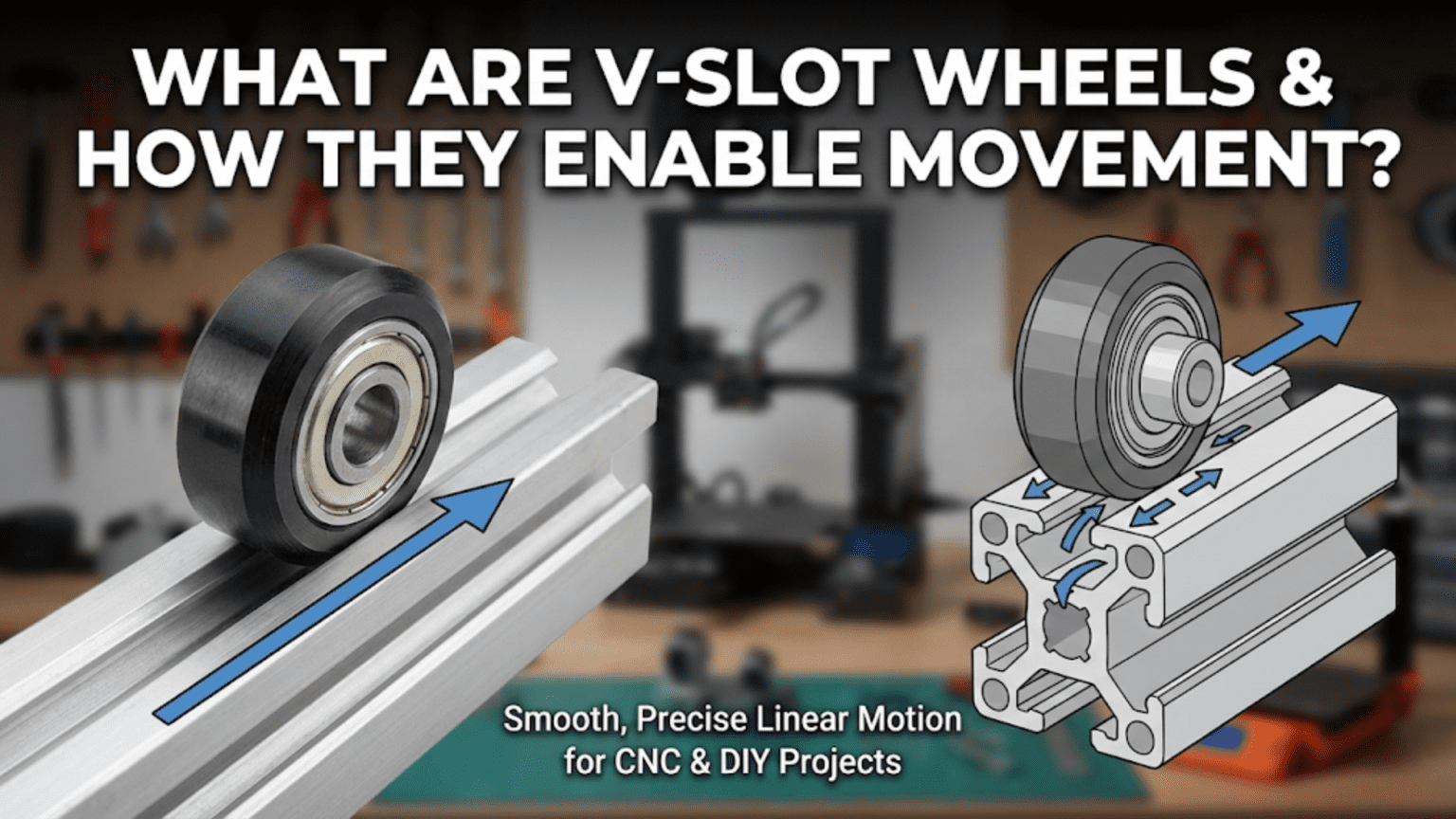
V-slot wheels are precision plastic or polycarbonate rollers with a V-shaped groove that ride along matching V-shaped channels machined into aluminum extrusion profiles (V-slot extrusion), enabling smooth linear motion by rolling rather than sliding, with the V-groove geometry providing self-aligning, low-friction contact with the rail. These wheels mount on axles integrated into carriage plates, with at least one wheel per axis on an eccentric nut (offset axle) allowing tension adjustment by rotating the nut to push the wheel tighter against or away from the extrusion, balancing smooth movement with adequate play elimination.
Introduction
When you slide your hand along the toolhead or bed of many popular 3D printers—especially those based on the Creality Ender series or similar designs—you’re feeling the work of V-slot wheels. These small rollers, barely larger than a coin, enable smooth, guided linear motion with a simplicity that’s easy to overlook. No complex rail systems, no lubrication requirements, no precision-ground steel components. Just carefully shaped plastic wheels rolling in machined aluminum channels.
The elegance of V-slot motion systems lies in their accessibility. The V-groove geometry provides self-aligning behavior—wheels naturally center in the channel without precise manual alignment. Installation requires basic tools. Maintenance involves simple tension adjustments. The entire system costs a fraction of equivalent linear rail arrangements. For budget printers and beginners, these advantages make V-slot systems the practical choice that opened 3D printing to a much wider audience.
Yet V-slot wheels have real limitations. They wear over time and require periodic replacement. They can’t match linear rails in precision or load capacity. Very high speeds or accelerations stress them more than alternatives. Understanding both the capabilities and limitations of V-slot systems helps you set appropriate expectations, recognize when maintenance becomes necessary, and evaluate whether alternative motion systems might better serve your needs.
In this comprehensive guide, we’ll explore V-slot wheels from their design and operating principles through practical maintenance and troubleshooting, understanding how these simple components enable reliable printer motion.
What Are V-Slot Wheels?
Understanding the components:
Wheel Construction
Core Structure: The typical V-slot wheel for 3D printers consists of several components working together:
Bearing Core:
- Standard ball bearing (608 bearing most common: 8mm bore, 22mm OD)
- Provides smooth rotation
- Carries radial loads from the carriage weight
- Sealed design protects from contamination
Wheel Body:
- Injection-molded polymer over bearing
- Polycarbonate (PC) most common material
- High-density polyethylene (HDPE) in some designs
- Delrin (acetal/POM) in premium versions
- Material must balance durability, flexibility, and low friction
V-Groove Profile:
- Precise V-shape machined or molded into wheel circumference
- Matches the V-channel in extrusion
- Creates line contact with both faces of the V
- Self-centering geometry
- Typically 90° included angle
Sizes:
- Standard mini V-wheel: ~24mm diameter, fits standard V-slot
- Large V-wheel: ~40mm diameter, for heavier loads
- Diameter affects contact patch and load capacity
V-Slot Extrusion Profiles
The rail that wheels run on:
V-Slot Difference from Standard T-Slot:
- Standard T-slot: Square channels, flat sides
- V-slot: Beveled channel edges create V profile
- OpenBuilds standard popularized V-slot design
- Specific geometry for wheel compatibility
Common Profiles:
- V-slot 2020: 20×20mm with V channels on 4 sides
- V-slot 2040: 20×40mm, wider for side-by-side wheel pairs
- V-slot 4040: 40×40mm for heavier applications
- Mini V-slot: Smaller profiles for compact builds
Channel Geometry:
- V-angle precisely matches wheel groove
- Surfaces must be smooth for quiet operation
- Anodized surface harder and more wear-resistant
- Channel cleanliness critical for smooth operation
How V-Slot Motion Works
The mechanics of rolling along channels:
Rolling Contact Principle
Line Contact:
- Wheel V-groove contacts both angled faces of V-channel
- Creates two contact lines rather than a point
- Spreads load across larger area
- Better load distribution than single-point contact
Self-Aligning:
- V-groove geometry automatically centers wheel
- Lateral forces push wheel back to center
- No need for precise horizontal alignment
- Simplifies installation and adjustment
Low Friction:
- Rolling contact vs. sliding (like rod bearings)
- Ball bearing provides near-frictionless rotation
- Minimal resistance to movement
- Motor easily overcomes any friction
Carriage Plates
Function:
- Rigid plate connecting multiple wheels
- Mounts components (hotend, bed) on one side
- Wheels on reverse side contact extrusion
- Transfers motion precisely
Wheel Arrangement:
- Minimum 3 wheels per axis (triangle)
- Typically 4 or 6 wheels for stability
- Arrangement determines carriage rigidity
- Must contact both sides of extrusion or both V-channels
Materials:
- Aluminum plates most common
- Steel for higher loads
- Precision machined for accurate wheel placement
- Anodized for protection
Contact Configuration
Single Rail:
- Wheels on both sides of one extrusion
- Three wheels minimum (two one side, one other)
- Compact but limited load capacity
- Common for lighter carriages
Dual Rail:
- Wheels on two parallel extrusions
- Better load distribution
- Reduces rocking tendency
- Used for heavier components (beds)
Eccentric Nuts: The Tension Adjustment System
Critical for proper wheel operation:
What Eccentric Nuts Are
Design:
- A nut where the bolt hole is offset from center
- Typically M5 thread
- Offset usually 0.5-1.2mm
- Rotatable to adjust wheel position
Function:
- Mounted as axle for at least one wheel per axis
- Rotating the nut moves the wheel toward or away from extrusion
- Adjusts tension/preload on the carriage
- Compensates for manufacturing tolerances
- Accommodates wheel wear over time
Identification:
- Looks like standard hex nut but with off-center hole
- Small flat or marking indicates offset direction
- Usually one or two per carriage
- Others use standard concentric axles
Adjustment Procedure
Determining Correct Tension:
- Too loose: Carriage wobbles, play in movement
- Too tight: Excessive friction, wheels wear faster
- Correct: Smooth movement, no play, wheels just touching
Test Method:
- Move carriage by hand, feel for resistance
- Check wheels—should all be contacting extrusion
- Try to wiggle carriage perpendicular to movement
- No play detectable, but movement not stiff
Adjustment Steps:
- Loosen the eccentric nut’s locking bolt slightly
- Rotate the eccentric nut with wrench or pliers
- Move carriage to feel resistance change
- Check for wobble by trying to rock carriage
- When correct: smooth movement, no wobble
- Tighten locking bolt without rotating eccentric nut
- Recheck after tightening (often shifts slightly)
Common Mistake:
- Over-tightening to eliminate any possibility of wobble
- Excessive tension accelerates wheel wear dramatically
- Causes rough movement and noise
- Correct is: just enough to eliminate play
Wheel Materials and Quality
Not all V-slot wheels perform equally:
Polycarbonate (PC) Wheels
Standard Material:
- Most common in consumer printer wheels
- Good balance of properties
- Clear or tinted appearance typically
- Widely available and affordable
Properties:
- Impact resistant
- Moderate hardness
- Low friction against aluminum
- Adequate temperature resistance for application
Durability:
- Reasonable lifespan with proper tension
- Wear rate depends on tension and speed
- Surface can develop flat spots from sitting stationary
- Typically last 6-18 months with moderate use
Delrin/POM Wheels
Premium Option:
- Acetal copolymer (Delrin® brand popular)
- Better wear resistance than polycarbonate
- Lower friction coefficient
- More consistent dimensions
Advantages:
- Longer service life
- Smoother movement
- Less noise
- Better dimensional stability
Cost:
- More expensive than standard PC wheels
- Worth it for quality builds
- Popular upgrade for frequent printers
Generic vs. Quality Wheels
Quality Differences:
- Bearing quality varies significantly
- V-groove precision affects noise and wear
- Material consistency matters
- Budget wheels often acceptable
Indicators of Quality:
- Smooth bearing rotation (spin test)
- Consistent V-groove profile
- No visible material defects
- Proper fit on standard axle hardware
V-Slot vs. Linear Rail Systems
Understanding the comparison:
V-Slot Advantages
Cost:
- Wheels typically $1-3 each
- Extrusion less expensive than precision rails
- Hardware inexpensive and widely available
- Total cost fraction of rail systems
Simplicity:
- Installation straightforward
- No specialized mounting plates required
- Extrusion serves structural AND motion function
- Less precision required in setup
Maintenance:
- No lubrication required
- Simple tension adjustment
- Easy wheel replacement
- Accessible to beginners
Noise:
- Generally quiet operation
- No metal-on-metal contact
- Vibration-absorbing polymer wheels
- Pleasant running sound
V-Slot Limitations
Precision:
- Less precise than linear rails
- Wheel deformation affects accuracy
- Cannot match high-precision rail tolerances
- More flex under load
Load Capacity:
- Lower than equivalent rail systems
- Wheels can deform under heavy loads
- Not suitable for heavy gantries
- Limits printer size/weight
Speed and Acceleration:
- Wear increases with speed
- High accelerations stress wheels
- Linear rails better for high-performance printing
- Modern speed printers use rails
Wear:
- Wheels wear and need replacement
- Rails last much longer
- Ongoing replacement cost
- Performance degrades gradually
When to Choose Each
V-Slot Best For:
- Budget builds
- Beginners
- Light to medium duty
- Moderate speeds (<150mm/s typical)
- Where simplicity matters
Linear Rails Better For:
- High-speed printing
- Precision requirements
- Heavy carriages
- Long-term reliability
- Performance builds
V-Slot System Comparison Table
| Feature | V-Slot Wheels | Linear Rods (LM8UU) | Linear Rails (MGN) |
|---|---|---|---|
| Cost | Very Low | Low | Moderate-High |
| Precision | Moderate | Moderate | High |
| Load Capacity | Moderate | Moderate | High |
| Maintenance | Moderate (wear) | Moderate (lubrication) | Low |
| Max Speed | Moderate | Moderate | High |
| Noise | Low | Low-Moderate | Low |
| Installation | Simple | Moderate | Moderate-Complex |
| Lifespan | Medium (wear) | Long | Very Long |
| Lubrication | None required | Required | Minimal |
Maintenance and Care
Keeping V-slot systems performing well:
Regular Cleaning
Why Cleaning Matters:
- Debris in V-channels causes rough movement
- Contamination accelerates wheel wear
- Abrasive particles score extrusion surface
- Affects print quality through vibration
Cleaning Procedure:
- Move carriage off section to be cleaned
- Compressed air removes loose debris
- Soft cloth removes residue
- IPA (isopropyl alcohol) dissolves stubborn contamination
- Allow to dry completely
- Check wheel condition while accessible
Frequency:
- Monthly for typical use
- More frequent in dusty environments
- After any debris contamination
- Before major calibration work
Tension Checking and Adjustment
When to Check:
- Monthly inspection
- After any layer shift events
- If movement feels rough or wobbly
- After long continuous printing sessions
Adjustment Frequency:
- New printers need adjustment within first weeks
- Wheels wear and require more frequent adjustment initially
- Stabilizes after break-in period
- Check quarterly thereafter
Wheel Replacement
When to Replace:
- Visible flat spots on wheel surface
- Grooves worn into wheel V-profile
- Rough movement that cleaning doesn’t fix
- Cracked or damaged wheel body
- Bearing feels rough or noisy
- Eccentric nut adjustment no longer compensates
Replacement Procedure:
- Move carriage to accessible position
- Note eccentric nut positions before removal
- Remove bolts/axles holding wheels
- Swap wheels (keep axle hardware)
- Reinstall with same or adjusted eccentric nut position
- Readjust tension
- Test movement
Cost Consideration:
- Wheels inexpensive ($1-3 each)
- Replace all wheels on carriage simultaneously
- Mixing old and new wheels creates uneven wear
- Budget for annual replacement in active printers
Common V-Slot Problems
Rough or Noisy Movement
Symptoms: Gritty feeling, clicking or popping sounds.
Causes:
- Debris in V-channels
- Worn wheel surface
- Damaged bearing in wheel
- Damaged extrusion surface
Diagnosis:
- Clean channel, retest
- Spin wheels individually, feel for rough bearings
- Inspect extrusion surface for scoring or damage
Solutions:
- Clean thoroughly
- Replace worn wheels
- Replace damaged extrusion section if scored
Carriage Wobble (Play)
Symptoms: Carriage rocks perpendicular to movement, layer shifts.
Causes:
- Insufficient wheel tension
- Worn wheels
- Eccentric nut backed out
- Loose fasteners
Solutions:
- Adjust eccentric nuts
- Replace worn wheels
- Verify fastener tightness
Binding or Stiff Movement
Symptoms: Carriage requires excessive force, motors skip steps.
Causes:
- Wheels over-tensioned
- Debris blocking movement
- Misaligned extrusion (not parallel)
- Damaged wheel creating drag
Solutions:
- Back off eccentric nut tension
- Clean V-channels thoroughly
- Check extrusion parallelism
- Replace damaged wheels
Flat Spots
Symptoms: Periodic clicking or vibration at regular intervals.
Cause:
- Carriage stationary for extended time
- Load deforms wheel at contact point
- More common in polycarbonate wheels
Prevention:
- Move carriage to different position when storing
- Delrin wheels more resistant to flat spots
Treatment:
- Often resolves with movement (heat from friction)
- Severe flat spots require replacement
Upgrading V-Slot Systems
Better Wheels:
- Upgrade to Delrin wheels
- Noticeably smoother and longer lasting
- Simple swap, same mounting hardware
- Popular first upgrade
Dual-Wheel Carriages:
- Two wheels per position instead of one
- Spreads load, reduces wear
- Better stability
- Requires wider extrusion or modified carriages
Linear Rail Conversion:
- Most significant upgrade
- Replace V-slot system entirely
- Dramatic precision and longevity improvement
- Significant cost and complexity increase
Conclusion
V-slot wheels and their matching extrusion rails represent an accessible, practical approach to 3D printer motion systems that has enabled millions of hobbyists worldwide to build and operate printers without specialized knowledge or expensive components. The self-aligning V-groove geometry, simple tension adjustment via eccentric nuts, and elimination of lubrication requirements create a system that beginners can maintain confidently.
Understanding how V-slot systems work—the rolling contact principles, the role of wheel material in durability and friction, the critical importance of correct tension, and the gradual wear that requires periodic maintenance—transforms routine care from guesswork into informed practice. Recognizing the symptoms of worn wheels, contaminated channels, and improper tension allows quick diagnosis and correction before problems affect print quality.
The limitations are real. V-slot wheels can’t match linear rails in precision, load capacity, or longevity. Very high-speed printing accelerates wear and pushes the system’s capabilities. But for the vast majority of hobby printing applications at moderate speeds and with appropriate maintenance, V-slot systems deliver reliable, accurate motion at a price point that makes 3D printing accessible.
The next time you watch your printer’s toolhead glide across the build area, consider the V-slot wheels making it possible. Those small polycarbonate rollers, carefully tensioned against machined aluminum channels, are translating motor rotation into the precise linear movement that deposits each layer of your print—a simple, elegant solution that has democratized 3D printing for countless makers worldwide.