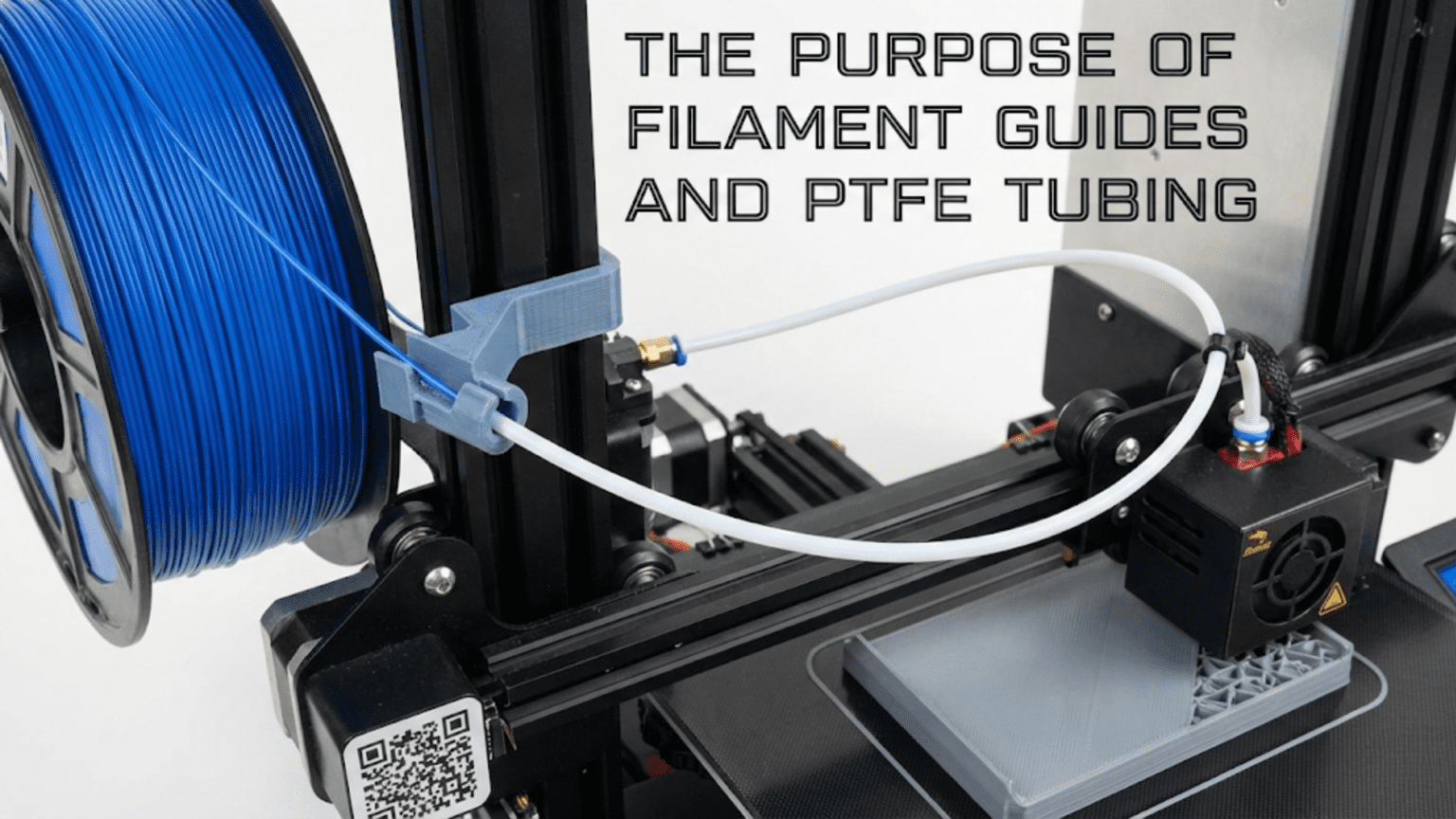
Filament guides and PTFE (polytetrafluoroethylene/Teflon) tubing manage the filament path from spool to extruder to hotend, reducing friction and preventing tangling or binding that would cause feeding problems. PTFE tubing serves as the low-friction conduit in Bowden setups (connecting remote extruder to hotend) and as thermal barriers in hotends (preventing heat creep), while filament guides include simple eyelets, bearing-mounted pulleys, and constrained paths that direct filament smoothly through direction changes, all working together to ensure reliable, consistent filament delivery throughout the printing process.
Introduction
The journey filament takes from spool to nozzle seems simple—just pull plastic from the roll and push it into the extruder. Yet this path involves multiple direction changes, potential friction points, and opportunities for tangling or binding. Without proper guidance and low-friction pathways, filament feeding becomes unreliable. The extruder struggles against resistance, inconsistent feeding creates print defects, and frustrating jams interrupt printing.
Filament guides and PTFE tubing solve these problems through careful path management. Simple guides ensure filament routes smoothly from spool to extruder without sharp bends or binding points. PTFE tubing—with its remarkably low friction coefficient—creates pathways where filament slides freely despite long distances or tight spaces. Together, these components transform potentially problematic filament paths into reliable, low-resistance delivery systems.
Understanding what these components do, why PTFE’s properties make it ideal for filament contact, and how to maintain them properly prevents feeding problems and extends component lifespan. Whether dealing with the long Bowden tube connecting a remote extruder or the short thermal barrier inside your hotend, knowing how PTFE tubing works helps you troubleshoot issues and recognize when replacement becomes necessary.
In this comprehensive guide, we’ll explore filament guides and PTFE tubing from fundamental principles through practical maintenance, understanding how these simple components enable reliable filament delivery.
What Is PTFE and Why Does It Matter?
Understanding the material’s special properties:
PTFE Material Properties
Chemical Name: Polytetrafluoroethylene Common Name: Teflon (DuPont trademark)
Key Characteristics:
Extremely Low Friction:
- One of lowest friction coefficients of any solid material
- Coefficient typically 0.05-0.10 (vs. 0.15-0.25 for most plastics)
- Filament slides through PTFE with minimal resistance
- Critical for long Bowden tubes and tight spaces
Temperature Resistance:
- Continuous use: Up to ~260°C
- Brief exposure: Up to ~300°C
- Degradation begins above 260°C
- Sufficient for most 3D printing applications
- Limitation for very high-temperature materials
Chemical Resistance:
- Virtually inert to most chemicals
- Resistant to filament plasticizers
- Won’t degrade from PLA, PETG, ABS contact
- Long-lasting in printer environments
Non-Stick Surface:
- Similar to non-stick cookware
- Plastic doesn’t adhere to PTFE
- Prevents filament sticking inside tubes
- Easy to clean if contaminated
Why PTFE for Filament Paths
Friction Reduction:
- Filament slides freely through PTFE tubes
- Critical for Bowden systems (long distances)
- Reduces extruder motor load
- Enables consistent feeding
Thermal Barrier:
- Used inside hotends at heat break
- Low thermal conductivity limits heat transfer
- Creates sharp temperature gradient
- Prevents heat creep into cold zone
Durability:
- Resists wear from filament movement
- Maintains smooth bore over time
- Doesn’t degrade from typical printing plastics
- Long service life when used within temperature limits
PTFE Tubing in Bowden Systems
The primary application in consumer printers:
Bowden Tube Function
Connecting Extruder to Hotend:
- Bridges distance from frame-mounted extruder to moving hotend
- Typically 300-600mm length depending on printer size
- Guides filament through this entire distance
- Must route through printer’s movement range
Low-Friction Conduit:
- PTFE enables pushing filament through long distance
- Standard plastic tubes would create excessive friction
- Extruder can push reliably through even 600mm+ tubes
- Critical for Bowden system functionality
Size Standards:
- Outer Diameter (OD): 4mm most common, 6mm for 2.85mm filament
- Inner Diameter (ID): 2mm for 1.75mm filament, 3mm for 2.85mm filament
- Precision bore: Better tubes have consistent ID (±0.05mm)
- Capricorn tubing: Premium option with tighter tolerances, better heat resistance
Installation and Routing
Pneumatic Fittings:
- Push-to-connect fittings most common (PC4-M6, PC4-M10)
- Tube pushes into fitting, grips automatically
- Collet release allows tube removal
- Must seat fully for reliable connection
Routing Considerations:
- Avoid sharp bends (creates resistance)
- Minimize total length (less friction)
- Secure to prevent movement/vibration
- Allow for printer motion without pulling
- Cable chains often guide Bowden tubes
Common Mistakes:
- Tube cut at angle (should be perfectly square)
- Not fully inserted into fittings
- Excessive length creating loops/slack
- Sharp bends at fittings
- Tube too short, creating tension
Bowden Tube Problems
Gap at Hotend:
- Tube end not flush against nozzle/heatbreak
- Molten plastic accumulates in gap
- Causes clogs and jams
- Requires proper installation procedure
Worn or Deformed Tube:
- ID enlarges from filament wear
- Allows filament to buckle
- Creates inconsistent feeding
- Replace when deformed
Heat Damage:
- Browning/blackening indicates overheating
- Occurs when PTFE exposed to excessive temperature
- Can release toxic fumes if severely overheated
- Replace and address heat source
Retraction Clogs:
- Gap allows molten plastic into tube
- Retractions pull plastic back where it solidifies
- Creates clogs requiring disassembly
- Prevention through proper installation critical
PTFE in Hotend Heat Breaks
Internal thermal barrier application:
PTFE-Lined Heat Breaks
Design:
- PTFE tube inside heat break passage
- Provides low-friction path through thermal transition
- Limits heat transfer to cold zone
- Common in budget hotends
Temperature Limitation:
- Restricts hotend to ~240-250°C safe maximum
- PTFE degradation above 260°C
- Adequate for PLA, PETG, standard ABS
- Insufficient for high-temp materials (Nylon, Polycarbonate)
Advantages:
- Lower cost than all-metal
- Very smooth filament path
- Reduced clogging tendency
- Good for standard materials
Maintenance:
- Replace PTFE liner periodically
- Check for heat damage (browning)
- Ensure proper seating
- More frequent than all-metal designs
All-Metal Heat Breaks
No PTFE in Heat Zone:
- Metal-only passage through heat break
- No temperature limitation from PTFE
- Enables 300°C+ printing
- Required for high-temp materials
Tradeoffs:
- Slightly higher friction
- More prone to heat creep without proper cooling
- May need higher retraction
- Benefits worth it for high-temp printing
Hybrid Designs
PTFE Above Heat Zone:
- Some all-metal hotends use PTFE in cold zone only
- Not exposed to melting temperatures
- Provides smooth path without temperature limit
- Best of both approaches
Filament Guides
Beyond tubes, various guides manage filament path:
Spool Holder to Extruder
Simple Eyelets:
- Smooth holes guiding filament direction
- Prevent sharp bends
- Keep filament aligned to extruder
- Minimal cost and complexity
Bearing-Mounted Pulleys:
- Small pulleys with ball bearings
- Filament runs over pulley edge
- Near-zero friction direction change
- Smooth filament path
- Higher cost but excellent performance
Constrained Paths:
- Channels or tubes guiding filament
- Prevent tangling from movement
- Keep organized path
- Particularly useful for multiple filaments
Filament Sensors
Integrated Guidance:
- Many sensors include filament guides
- Ensure proper sensor alignment
- Smooth entry and exit
- Combined function
Runout Sensor Paths:
- Must maintain low friction through sensor
- Any binding affects sensor accuracy
- Smooth guides critical
Multi-Material Systems
Path Separation:
- Individual guides for each filament
- Prevent cross-contamination
- Organized routing
- Color/material identification
Merger Points:
- Guides bringing filaments to selector
- Critical for clean transitions
- Low friction essential
- Precise alignment needed
PTFE Tubing Types and Quality
Not all PTFE tubing performs equally:
Standard PTFE Tubing
Generic White Tube:
- Basic PTFE formulation
- 2mm ID, 4mm OD typical
- Adequate for most applications
- Budget-friendly ($5-10 per meter)
Performance:
- Works fine for standard printing
- May show wear faster than premium
- Sufficient for temperatures under 240°C
- Good starting point
Capricorn PTFE Tubing
Premium Option:
- Tighter bore tolerance (±0.02mm vs ±0.05mm)
- Higher temperature rating (~280°C vs ~260°C)
- Lower friction coefficient
- Blue color for identification
- Higher cost ($15-25 per meter)
Benefits:
- Better dimensional consistency
- Reduced resistance
- Longer lifespan
- Better for Bowden systems
- Particularly beneficial for flexible filaments
Worth It?:
- Noticeable improvement in Bowden setups
- Less critical for short direct drive tubes
- Professional/production use justified
- Hobbyist use: nice but not essential
TFM Tubing
Modified PTFE:
- Fluorinated Ethylene Propylene copolymer
- Even higher temperature rating (300°C+)
- Slightly higher cost
- Specialized applications
Use Cases:
- High-temperature hotend liners
- Replacing PTFE in all-metal conversions
- Industrial applications
Installation Best Practices
Proper installation prevents problems:
Cutting PTFE Tubing
Critical Requirement: Perfectly square cuts
Proper Method:
- Use sharp blade (razor, tubing cutter, or specialized PTFE cutter)
- Cut perpendicular to tube axis
- Verify cut is square visually
- Deburr any rough edges
- Check for oval deformation (resquare if needed)
Why It Matters:
- Angled cuts create gaps at fittings
- Gaps allow plastic accumulation and clogs
- Square cuts seal properly
- Critical for hotend tube installation
Bowden Tube to Hotend
Installation Sequence (varies by design):
- Heat hotend to printing temperature
- Remove nozzle
- Insert tube through heat break from top
- Push tube until it bottoms against nozzle threads
- Hold tube in place, install nozzle partially
- Back tube off ~1mm
- Tighten nozzle (creates gap for expansion)
- Push tube firmly again
- Tighten nozzle fully
- Secure tube with fitting
Gap Prevention:
- Tube must seat against nozzle
- Thermal expansion accounted for
- No gap for plastic to accumulate
- Follow manufacturer procedure
Pneumatic Fitting Installation
Proper Insertion:
- Push tube firmly until resistance
- Should click or seat noticeably
- Tug test to verify grip
- Should not pull out with moderate force
Collet Function:
- Grips tube when pulled
- Release by pushing collet while pulling tube
- Don’t force without releasing
- Replace if grip fails
Seating Depth:
- Mark tube at fitting edge
- Remove and measure insertion depth
- Should insert 10-15mm typically
- Less indicates improper seating
Maintenance and Replacement
Keeping guides and tubes functional:
Inspection Schedule
Monthly:
- Visual check for damage or deformation
- Verify fittings secure
- Look for wear or discoloration
- Check routing hasn’t shifted
Quarterly:
- Remove and inspect tube interior if accessible
- Check for wear patterns or damage
- Verify bore hasn’t enlarged
- Replace if questionable
Cleaning
External Cleaning:
- Wipe exterior with clean cloth
- Remove any dust or contamination
- Check for damage while cleaning
Internal Cleaning:
- Push cleaning filament through
- Can use filament with abrasive if needed
- Flush from both directions
- Replace rather than extensive cleaning usually
When to Replace
PTFE Tubing Replacement Indicators:
- Discoloration (browning from heat)
- Enlarged bore (filament loose)
- Visible wear or scoring inside
- Deformation or kinking
- After high-temp material use (if standard PTFE)
- Periodic replacement (annually for Bowden)
Replacement Process:
- Measure and cut new tube precisely
- Square cuts critical
- Install following proper procedure
- Test before printing
Filament Guide Replacement:
- Worn bearings (if bearing-type)
- Damaged eyelets or mounts
- Replace rather than attempt repair
Troubleshooting Guide Problems
Inconsistent Extrusion:
- Check tube for internal wear or damage
- Verify no gaps at hotend connection
- Ensure fittings tight and tube fully seated
- Check guide bearings rotating freely
Frequent Clogs:
- Gap at hotend allowing plastic accumulation
- Damaged tube creating rough spots
- Contamination in tube
- Replace tube, verify installation
High Extruder Resistance:
- Tube routed with sharp bends
- Guide binding or damaged
- Tube ID too small
- Check path for problems
Retraction Clogs:
- Gap at hotend (most common)
- Reinstall tube properly
- Verify nozzle/tube interface
- May need hotend disassembly
Upgrading Guides and Tubing
Capricorn Tube Upgrade:
- Most popular Bowden upgrade
- Noticeable improvement
- Direct replacement for standard
- Follow same installation procedures
Better Filament Guides:
- Replace simple eyelets with bearing pulleys
- Reduce friction significantly
- Smoother feeding
- Particularly beneficial for flexible filaments
All-Metal Hotend Conversion:
- Removes PTFE temperature limitation
- Enables high-temp materials
- Different maintenance requirements
- Consider if printing Nylon, PC, etc.
Conclusion
Filament guides and PTFE tubing might seem like simple components—just tubes and eyelets guiding filament from point A to point B. Yet their role in ensuring reliable filament delivery cannot be overstated. PTFE’s remarkably low friction enables pushing filament through long Bowden tubes or tight spaces inside hotends. Properly positioned guides prevent binding, tangling, and excessive friction that would cause feeding failures.
Understanding these components—why PTFE’s properties make it ideal for filament contact, how Bowden tubes connect remote extruders to hotends, what causes tube wear and when replacement becomes necessary—transforms mysterious feeding problems into diagnosable issues with clear solutions. A worn tube with enlarged bore or a gap at the hotend connection creates frustrating symptoms, but recognizing the root cause makes repair straightforward.
Proper installation matters enormously. Square cuts on PTFE tubes, correct seating in pneumatic fittings, and elimination of gaps at the hotend prevent most problems before they occur. The few minutes invested in careful installation saves hours of troubleshooting later when printing fails mysteriously.
The next time filament flows smoothly from spool to nozzle without hesitation or binding, appreciate the guides and PTFE tubing making it possible. These simple components aren’t just directing filament—they’re creating the low-friction, reliable pathways that transform spooled plastic into the precisely controlled extrusion that builds your designs.