3D printing is rapidly transforming the dental industry, introducing a new era of precision and efficiency in dental care. This technology enables the customization of dental products to individual patient needs, significantly enhancing treatment effectiveness and patient comfort. With its ability to streamline processes and reduce costs, 3D printing is becoming an essential tool in modern dental practices.
Advantages of 3D Printing in Dentistry
3D printing offers numerous advantages that are particularly impactful in the dental field:
Customization: This technology excels in producing dental appliances tailored exactly to the unique anatomy of each patient. From crowns and veneers to orthodontic devices, 3D printing ensures a perfect fit, which is crucial for the effectiveness and comfort of dental treatments.
Speed and Efficiency: Traditional methods of creating dental prosthetics and devices can take weeks, involving multiple patient visits. 3D printing dramatically reduces this timeline, allowing dentists to design and produce devices like crowns or aligners in-house within hours or days.
Cost-Effectiveness: By minimizing material waste and streamlining the production process, 3D printing lowers the cost of creating dental devices. Additionally, the ability to produce devices in-house saves on labor and shipping costs associated with traditional dental labs.
Key Applications of 3D Printing in Dentistry
The applications of 3D printing in dentistry are diverse and expanding:
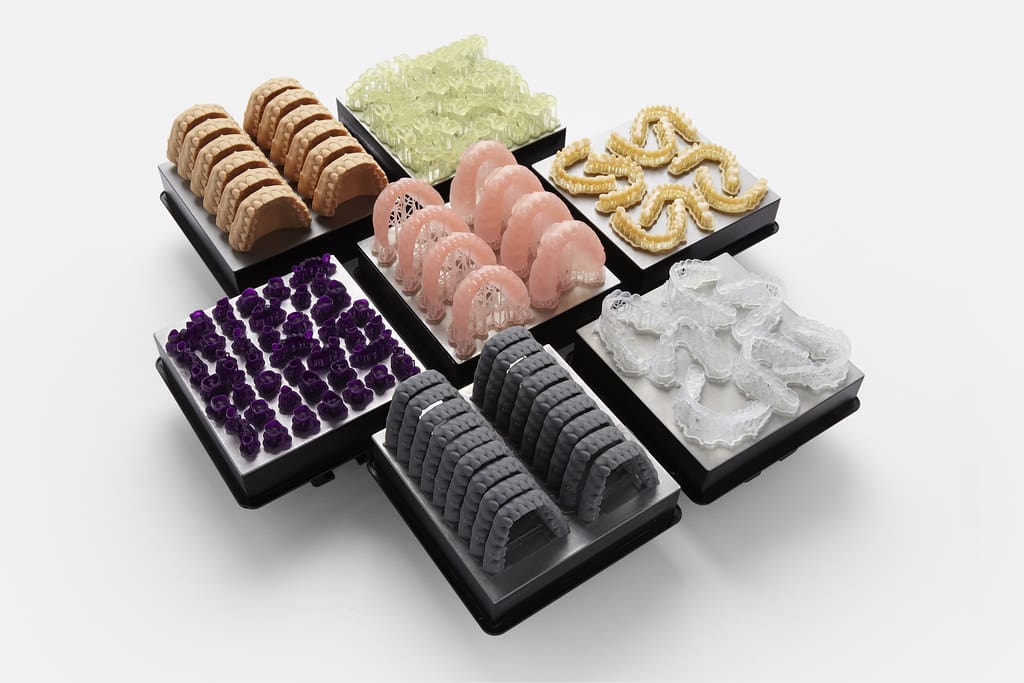
Crowns and Bridges: 3D printing allows for the rapid production of crowns and bridges with precise adherence to the dental impressions taken from the patient. These can be made with photopolymeric resins or ceramics, providing durability along with aesthetic matching to natural teeth.
Orthodontics: Clear aligners are one of the most popular applications of 3D printing in dentistry. Each set of aligners is custom-made to gradually move teeth into their desired position, and they are virtually invisible when worn.
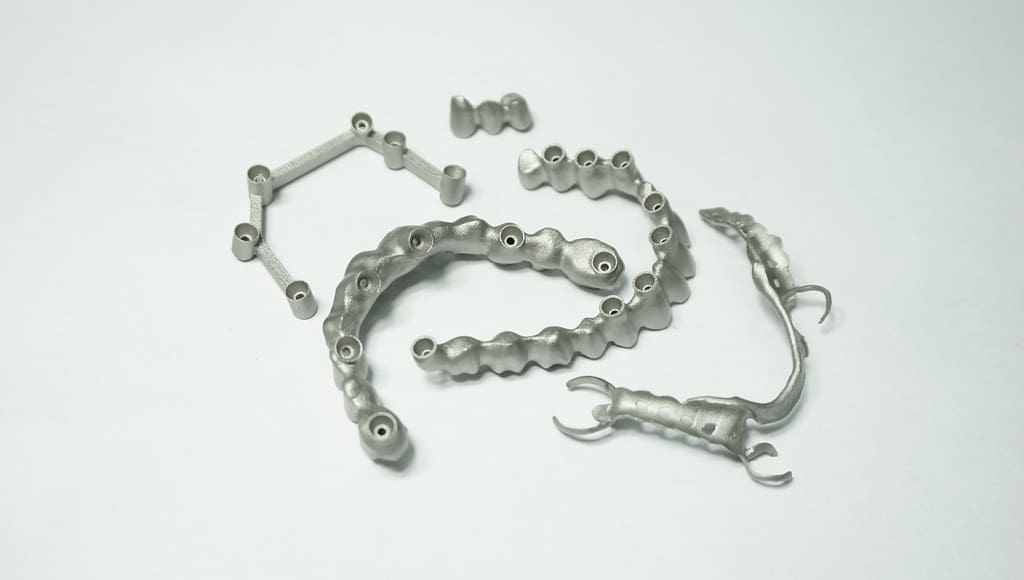
Dentures and Implants: For edentulous patients, 3D printing can produce complete dentures and various components of dental implants. These printed prosthetics provide a higher level of comfort and fit compared to traditionally manufactured alternatives.
Surgical Guides and Models: 3D printing is used to create detailed surgical guides that help in accurately placing dental implants. These guides ensure that implants are placed with optimal precision, improving the success rates of surgical interventions.
Technological Innovations and Materials
Recent technological advancements have expanded the capabilities of 3D printing in dental applications. New high-resolution printers capable of handling dental-specific materials have entered the market, enhancing the quality and durability of printed dental products. Materials such as advanced dental resins offer properties like translucency, color matching, and biocompatibility, which are essential for both functional and aesthetic purposes in dentistry.
Challenges and Considerations
While 3D printing brings many benefits, there are challenges to its wider adoption in the dental field. The initial cost of 3D printers and the need for operators skilled in digital dental design can be significant barriers for smaller practices. Additionally, ensuring that 3D printed dental products meet regulatory standards for health and safety remains a crucial consideration.
Future Outlook
The future of 3D printing in dentistry looks promising with ongoing innovations that could redefine dental treatments. Research into bioprinting dental tissues and even teeth could one day allow for even more personalized and regenerative dental care. As digital dentistry continues to evolve, 3D printing is expected to play an increasingly central role in dental practices worldwide.
3D printing is setting a new standard in the dental industry, offering solutions that combine efficiency, customization, and innovation. As the technology continues to advance, it provides dental professionals with tools that not only improve patient care but also push the boundaries of what’s possible in dental medicine. Embracing 3D printing is not just about adopting new technology—it’s about moving towards a future where dental care is more accessible, effective, and tailored to individual needs.