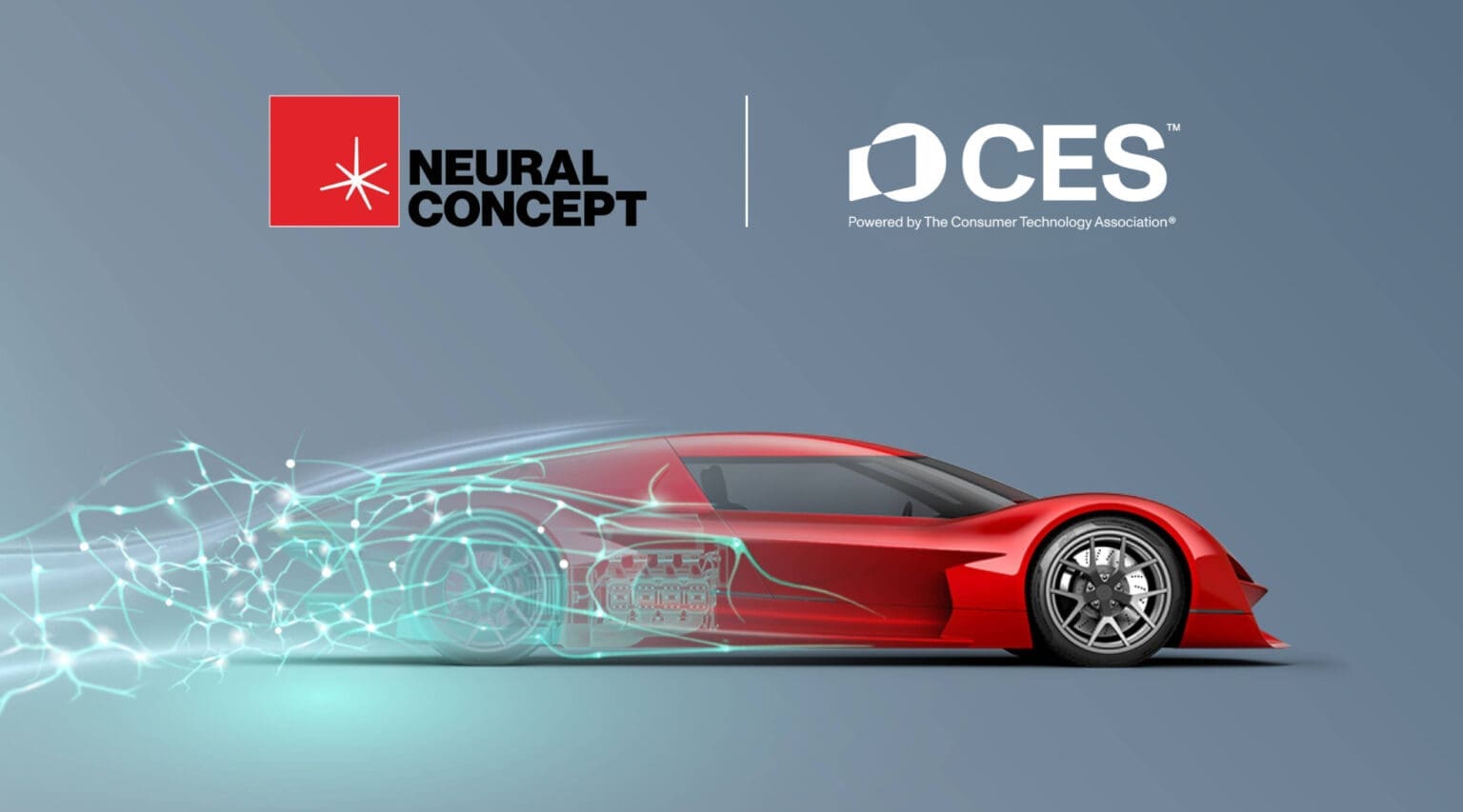
Neural Concept, a Swiss artificial intelligence company developing deep learning platforms that accelerate engineering simulation and design optimisation, announced on February 9, 2026, that it has raised $100 million in Series C funding led by Goldman Sachs Growth Equity with participation from Forestay Capital, Alven, HTGF, D.E. Shaw Ventures, and Aster Capital. The round brings Neural Concept’s total funding to $140 million and values the company at over $500 million, reflecting strong investor conviction in AI’s ability to compress product development timelines across manufacturing industries.
The company’s technology addresses one of the most resource-intensive aspects of modern product development: computational simulation. Engineers designing aircraft, automobiles, turbines, wind farms, consumer electronics, and medical devices must verify how their products perform under physical conditions — aerodynamics, heat transfer, structural stress, fluid flow — before building physical prototypes. Traditional simulation approaches using computational fluid dynamics (CFD) and finite element analysis (FEA) software require hours or days of high-performance computing time per design iteration, creating severe bottlenecks in product development cycles.
Neural Concept’s platform trains deep learning models on the outputs of traditional simulations, enabling the AI to predict simulation results in seconds rather than hours for new design geometries. Once trained on a sufficient corpus of simulation data for a particular engineering domain, the neural surrogate model generalises accurately to new designs in the same family, delivering speed improvements of 100x to 1000x compared to running full physics simulations. This compression of iteration cycles allows engineers to explore vastly larger design spaces, test more radical concepts, and converge on optimal solutions faster than previously possible.
Customer deployments span aerospace, automotive, energy, and consumer product sectors. Aircraft manufacturers use Neural Concept’s platform to optimise wing profiles and fuselage geometries for fuel efficiency. Automotive engineers accelerate aerodynamic optimisation of vehicle body shapes. Wind energy companies optimise turbine blade designs for maximum power generation at specific wind conditions. Consumer electronics manufacturers simulate thermal management in compact device enclosures.
The Goldman Sachs-led Series C funding will support several growth initiatives. Geographic expansion targets engineering hubs in Germany, Japan, South Korea, and the United States where advanced manufacturing companies are actively seeking development acceleration tools. Sales team growth addresses the enterprise-level procurement cycles typical of aerospace and automotive customers that require extended piloting, customisation, and integration work before full deployment. Product development focuses on expanding domain coverage to new engineering simulation types and improving model accuracy for extreme design extrapolations outside training data distributions.
The competitive landscape includes established simulation software vendors like ANSYS, Siemens Simcenter, and Dassault Systèmes that are incorporating AI acceleration into their platforms, alongside startups including Monolith AI, Pasteur Labs, and Aeolus Robotics approaching similar problems from different angles. Neural Concept differentiates through deep technical specialisation in 3D geometric deep learning, strong intellectual property developed over five years of research, and customer relationships with leading manufacturers who have embedded the platform in production workflows.