

Overview
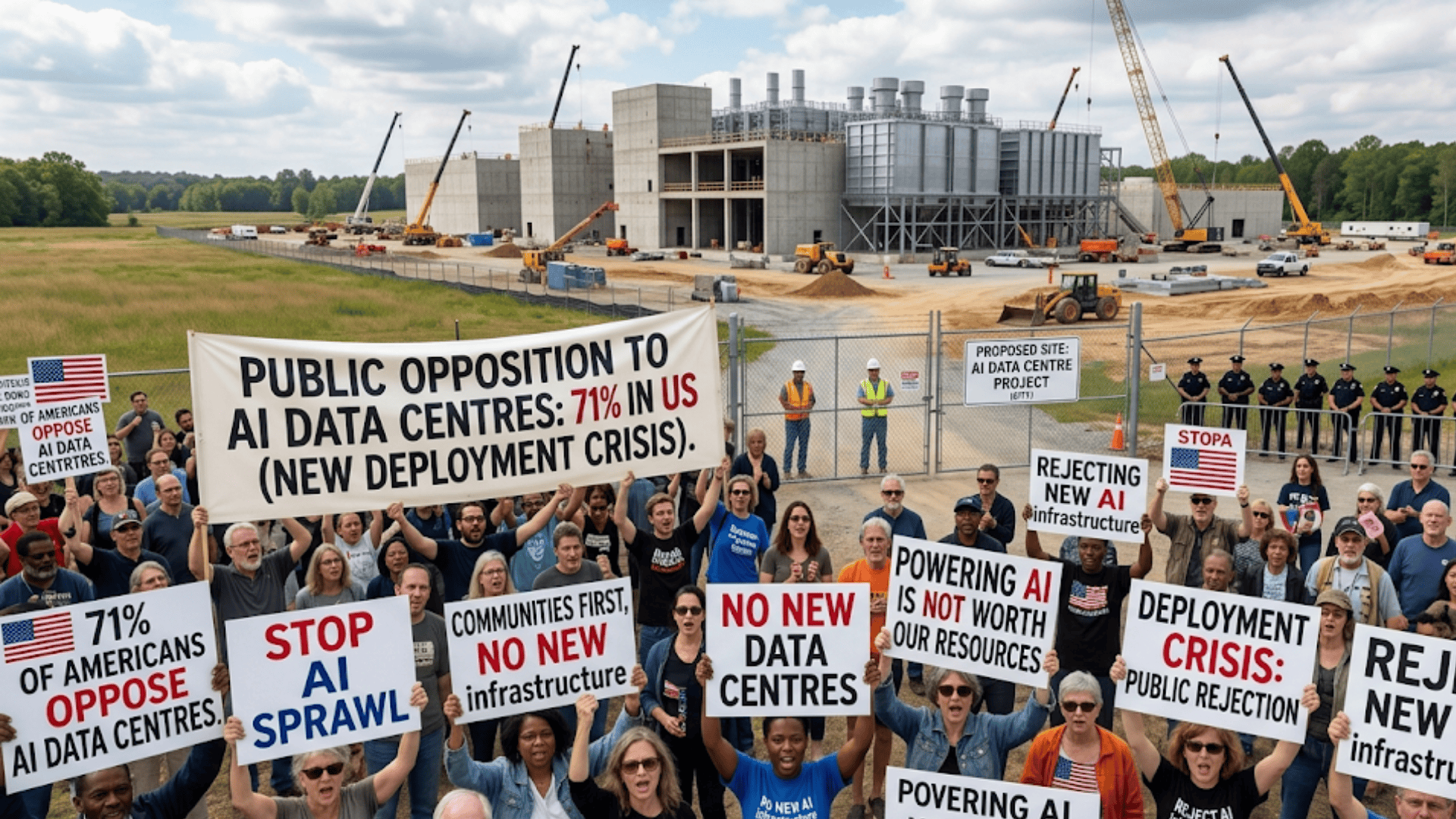
A Gallup survey published this week has surfaced a political and social dynamic that technology industry leaders have been quietly worried about for months: the American public’s growing resistance to AI data centre construction in their communities. The survey found that 71% of US adults oppose having an AI data centre built in their local area, with 48% strongly opposed — numbers that represent a significant and organised sentiment that will increasingly shape the regulatory and permitting landscape for AI infrastructure investment.
What Is Driving the Opposition
The opposition is not irrational, and understanding its roots is essential for policymakers and technology companies trying to navigate it. AI data centres represent an unusual combination of characteristics that make them difficult to welcome as community neighbours. They consume electricity at enormous scale — a single large hyperscale facility can draw as much power as a mid-sized city. They require millions of gallons of water annually for cooling, drawing on local aquifers and municipal water systems. They generate significant noise from cooling equipment. They typically create relatively few permanent jobs relative to their physical footprint. And their economic benefits — primarily tax revenue and temporary construction employment — can feel remote to residents who bear the immediate costs of power infrastructure upgrades, water system stress, and neighbourhood disruption.
As AI infrastructure has scaled dramatically through 2025 and into 2026, communities in data centre corridors across Virginia, Texas, Arizona, and Ohio have increasingly organised against new developments. Zoning approvals that once passed quietly have become contentious multi-year battles involving state legislatures, utility regulators, and federal environmental review processes.
The Policy Implications
For the technology industry, the Gallup numbers are a warning signal with real operational consequences. Big Tech’s collective capital expenditure commitments for 2026 — which Meta, Amazon, Microsoft, and Alphabet have collectively indicated will approach $725 billion, almost entirely directed at AI infrastructure — are predicated on being able to build. If community opposition translates into permit denials, rezoning delays, or new legislative constraints at scale, those commitments cannot be fulfilled on the timelines the companies have announced.
For governments, the survey creates a genuine dilemma. AI infrastructure is widely regarded as economically and strategically critical, and falling behind in compute capacity is treated as a national competitiveness risk. But building it over the sustained objection of 71% of the public — and in violation of local democratic processes — is neither politically sustainable nor consistent with the principles that democratic governance is supposed to embody.
Technology’s Response
The industry’s most direct response has been to accelerate interest in alternatives that sidestep terrestrial opposition entirely, including offshore data centres and the orbital compute infrastructure Google and SpaceX are currently exploring. These alternatives remain expensive and technologically immature, but the Gallup numbers suggest the political pressure driving interest in them is real and growing.