Donut Lab’s Revolutionary Claims: A Solid-State Battery That Changes Everything—Or Nothing
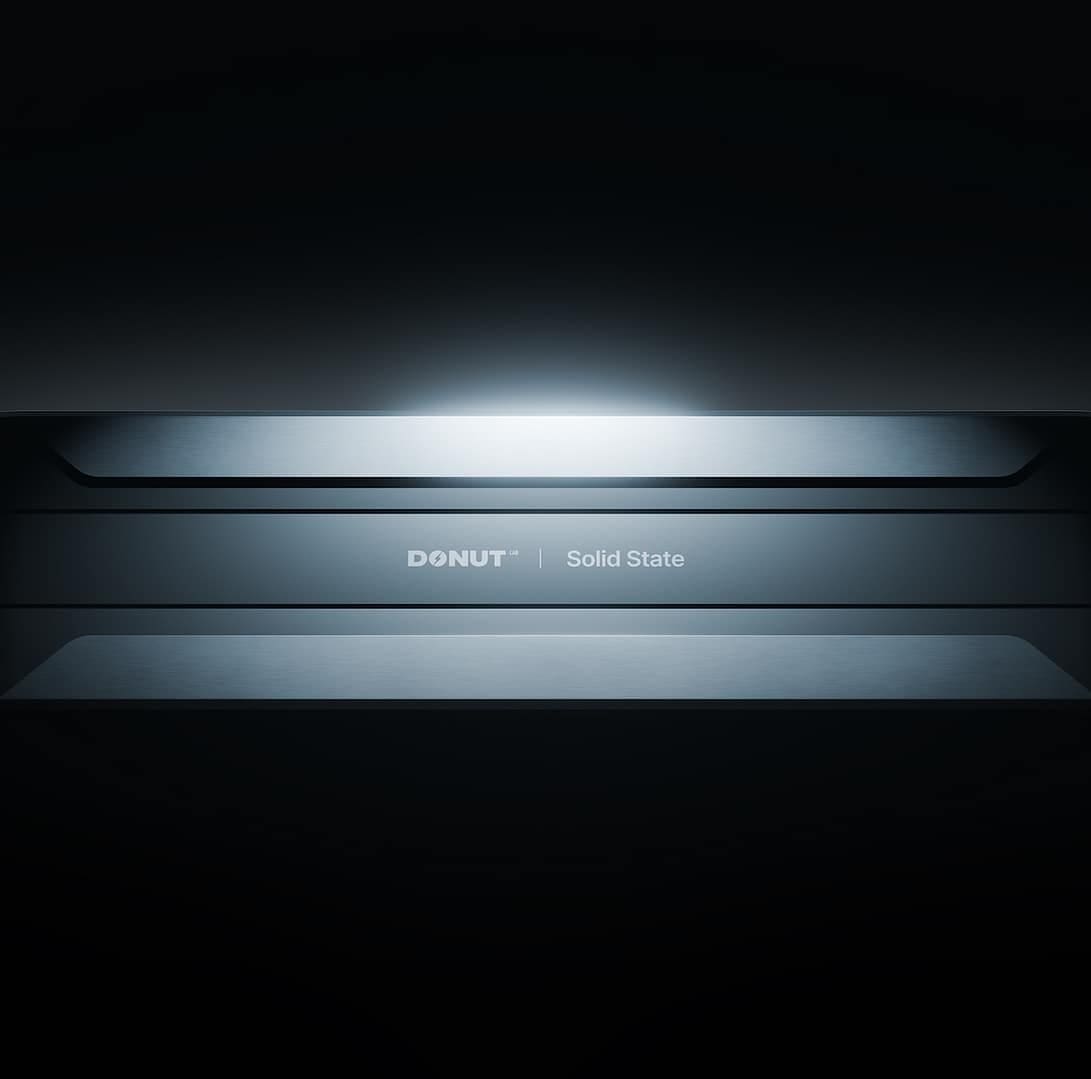
At CES 2026 in Las Vegas, Finnish startup Donut Lab made an announcement that sent shockwaves through the electric vehicle and energy storage industries: the company claimed to have developed the world’s first production-ready all-solid-state battery, boasting an energy density of 400 watt-hours per kilogram (Wh/kg), full charging in just five minutes, and an almost unbelievable lifespan of 100,000 charge cycles with minimal degradation. If these claims prove accurate, the company may have achieved what amounts to the holy grail of energy storage. If they don’t, CEO Marko Lehtimäki faces becoming one of the technology industry’s most spectacular failures.
The Extraordinary Claims
The specifications that Donut Lab announced on January 5, 2026, sound almost too good to be true—which is precisely what makes them so controversial within the battery technology community:
Energy Density: 400 Wh/kg – This figure represents roughly 30-40% higher energy density than the best conventional lithium-ion batteries currently in mass production. Most advanced lithium-ion cells today achieve between 250-300 Wh/kg. Higher energy density translates directly to longer range for electric vehicles or smaller, lighter battery packs for the same range.
Ultra-Fast Charging: 5 Minutes to 100% – Unlike conventional fast-charging systems that slow dramatically at 80% state of charge to protect battery longevity, Donut Lab claims its battery can charge fully to 100% in just five minutes without degradation. This charging speed would effectively eliminate “range anxiety” for electric vehicle drivers, making refueling EVs faster than most gasoline vehicles.
Unprecedented Lifespan: 100,000 Cycles – Most lithium-ion batteries are rated for 1,000-2,000 charge cycles before capacity degradation becomes significant. Donut Lab claims its solid-state cells can endure 100,000 cycles with only minimal capacity fade—a 50-100 times improvement that would essentially create batteries that outlast the vehicles they power. At one charge cycle per day, 100,000 cycles represents 274 years of use.
Extreme Temperature Performance – The company claims the battery retains over 99% capacity at -30°C and can operate at temperatures exceeding 100°C without degradation. This temperature resilience would enable deployment in extreme climates where conventional batteries struggle, from Arctic conditions to desert heat.
Safety by Design – Unlike lithium-ion batteries that use flammable liquid electrolytes, Donut Lab’s all-solid-state design eliminates these fire risks through its solid electrolyte. The company claims this design prevents thermal runaway chain reactions and the formation of metallic dendrites that can short-circuit conventional batteries.
Cost Competitiveness – Perhaps most remarkably, Donut Lab claims its battery achieves cost parity with lithium-ion technology from the outset, with potential for additional cost reductions as manufacturing scales. This claim is particularly surprising given that solid-state batteries have historically been projected to carry premium pricing.
Material Sustainability – The battery avoids rare earth materials including lithium, cobalt, and nickel—metals whose mining carries significant environmental costs and whose supply chains face geopolitical vulnerabilities. Instead, Donut Lab claims to use “100% green and abundant materials with global availability.”
The Verge Motorcycles Connection
What sets Donut Lab’s announcement apart from countless other battery breakthrough claims is the company’s assertion that these batteries are not merely laboratory demonstrations but are already in production and will power real vehicles on public roads in Q1 2026—meaning within the next few weeks.
Specifically, the batteries will be deployed in Verge Motorcycles’ 2026 model lineup, including the Verge TS Pro and TS Ultra electric superbikes. The connection between the two companies is not coincidental: Marko Lehtimäki serves as both CEO of Donut Lab and Chairman of Verge Motorcycles, creating a vertically integrated supply chain from battery manufacturer to vehicle producer.
The Verge TS Pro, introduced in November 2025, offers impressive specifications even before the solid-state battery integration:
- Range: 350 kilometers (217 miles) with the standard 20.2 kWh battery pack, expandable to 595 kilometers (370 miles) with an optional 33.3 kWh extended-range pack
- Charging: Ten-minute charging for up to 300 kilometers of range using 200kW NACS fast charging (the five-minute full charge claim apparently requires optimal conditions not yet widely available)
- Performance: 737 pound-feet of torque from Donut Lab’s hubless “Donut Motor” technology, enabling 0-60 mph acceleration in 3.5 seconds
- Top Speed: 124 mph (200 km/h) with 136.8 horsepower output
- Pricing: Starting at $30,000 for the TS Pro with standard battery, $34,900 for the extended-range variant
By publicly committing to customer deliveries in Q1 2026, Lehtimäki has created an extraordinarily tight verification timeline. Customers who purchase these motorcycles will either validate the extraordinary battery claims through real-world use—or expose them as vaporware within weeks. This timeline stands in stark contrast to the typical battery development announcement pattern, where companies project commercialization timelines years into the future.
The CEO’s Credibility—and What He’s Risking
Marko Lehtimäki is not a first-time entrepreneur with nothing to lose. His background includes building and successfully exiting a “no-code” application builder to SAP years before such tools became mainstream, demonstrating both technical vision and business execution skills. Following that success, he became a serial entrepreneur and investor, with Verge Motorcycles representing his highest-profile venture—a company that actually has real products on roads today, not just concept vehicles.
By announcing that the “miracle battery” is already in production and will ship in customer vehicles within approximately 10 weeks, Lehtimäki is betting his entire professional reputation on the technology’s validity. If the timeline slips significantly or if the performance specifications prove exaggerated, both Donut Lab and Verge Motorcycles could face catastrophic credibility loss. Verge has reportedly taken substantial customer deposits for these motorcycles, creating both financial and legal exposure if the promises don’t materialize.
In an interview with electric vehicle news outlet Electrek, Lehtimäki acknowledged the extraordinary nature of his claims while expressing confidence in their accuracy: “We waited to announce our solid state battery breakthrough until the technology was fully tested, validated, and already operating in vehicles. As of today, these batteries are real, in production vehicles, and represent the future of electric mobility.”
The Chemistry Mystery
One of the most controversial aspects of Donut Lab’s announcement is the company’s refusal to disclose the chemical composition and specific architecture of its solid-state cells. While such confidentiality is common for early-stage technologies, it prevents independent verification and breeds skepticism within the battery research community.
When pressed about the secrecy, Lehtimäki offered a nuanced explanation: while the company recognizes that the battery will inevitably be reverse-engineered once Verge motorcycles begin shipping to customers, maintaining confidentiality for the next 10 weeks provides a critical head start for securing additional OEM partnerships under non-disclosure agreements.
“We are right now shipping demo packs to OEMs under NDAs and under tight disclosures so that they can test that all of that is true, which serves our business very well [better than disclosing the chemistry],” Lehtimäki explained. “But these programs with OEMs are likely to take a long time before they become public.”
This strategy makes business sense if the technology is real—early OEM partners who can validate the claims will provide both revenue and credibility that strengthens Donut Lab’s market position. However, the lack of peer-reviewed research, independent testing results, or detailed technical disclosures means that outside observers must essentially take the company’s claims on faith until the promised customer deliveries materialize.
Broader Applications and Strategic Partnerships
Donut Lab showcased several partnerships at CES 2026 that demonstrate potential applications beyond motorcycles:
WATTEV Ultra-Lightweight EV Platform – WATT Electric Vehicles is developing an aluminum skateboard platform integrating Donut Lab’s in-wheel motors, inverters, software, and solid-state battery pack. The modular architecture could enable rapid development of various electric vehicle types.
Cova Power Smart Trailer – A joint venture between Finland’s Ahola Group and Donut Lab, these smart trailers for freight applications claim to achieve up to 54% reduction in diesel consumption and 30% reduction in total energy use through regenerative braking and intelligent power management.
ESOX Defense Platforms – In partnership with ESOX Group, Donut Lab’s batteries are being deployed in defense-grade platforms including a four-wheel tactical buggy and next-generation drone systems, where safety, reliability, and performance under extreme conditions are non-negotiable.
These diverse applications suggest Donut Lab is positioning its technology as a universal platform rather than a niche solution, assuming the core technology performs as claimed.
Competitive Landscape and Timeline Context
Donut Lab’s “production-ready now” positioning stands in sharp contrast to timelines from major battery manufacturers and automotive companies:
Samsung SDI continues to target mass production of all-solid-state batteries in 2027, following sample deliveries to automakers. The company’s roadmap highlights a 900 Wh/L anode-less architecture—volumetric density rather than gravimetric, but still representing leading-edge development.
Toyota, in collaboration with Idemitsu Kosan, targets initial commercialization between 2027 and 2028 while building solid electrolyte manufacturing capacity. Toyota has been particularly conservative with solid-state battery timelines after earlier overoptimistic projections.
Solid Power and QuantumScape, two leading solid-state battery startups in the United States, continue to focus on pilot production and OEM validation, with mass production timelines still several years away.
Against this backdrop of established players projecting 2027-2030 commercialization, Donut Lab’s claim of Q1 2026 production deployment would represent a stunning acceleration—or a reckless overreach.
The Next Three Months: Verification or Vaporware
The technology world now faces an unusually short verification timeline. Within approximately 8-10 weeks, Verge Motorcycles customers should begin taking delivery of bikes powered by Donut Lab’s solid-state batteries. Those early adopters will quickly determine whether the batteries deliver on their promises through real-world testing.
Key questions that will be answered include:
- Can the batteries actually charge to 100% in five to ten minutes without degradation?
- Does the extended-range configuration really deliver 595 kilometers (370 miles) on a single charge?
- How does performance degrade in extreme cold or heat?
- Do the batteries maintain capacity over hundreds of charge cycles as claimed?
If the technology performs as promised, Donut Lab will have achieved one of the most significant breakthroughs in energy storage history, with implications extending far beyond motorcycles to electric cars, aviation, grid storage, and portable electronics. The company could rapidly scale from its initial 1 gigawatt-hour production capacity to become a major player in the global battery industry.
If significant gaps emerge between claims and reality, the fallout will be severe not just for Donut Lab and Verge Motorcycles, but potentially for the solid-state battery sector more broadly, as investor and customer skepticism increases.
In the memorable words of one industry observer: “This battery is about to change the world in 3 months, or make this guy a fool.” The clock is ticking, and we’ll all find out which outcome materializes very soon.