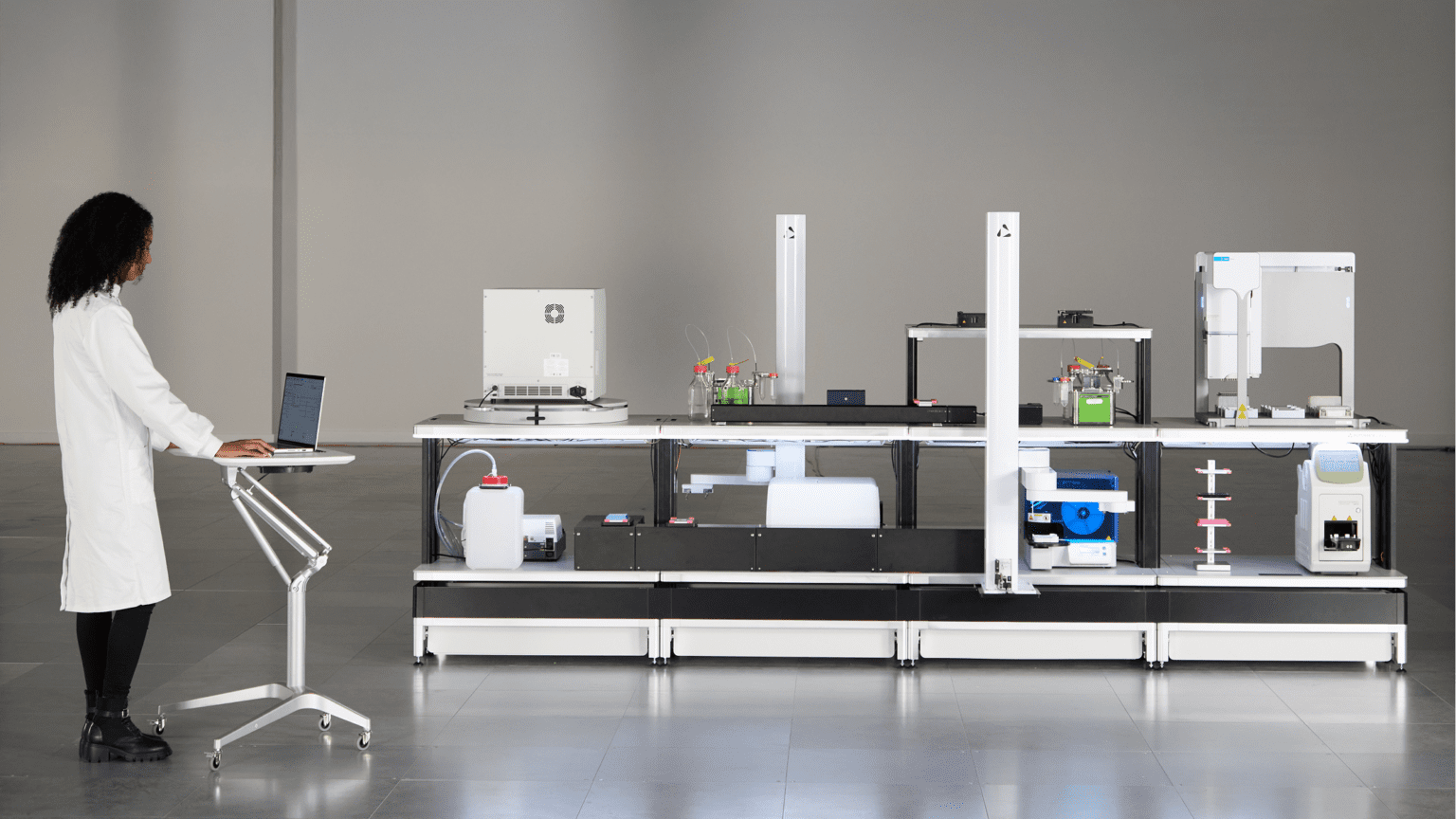
Automata, a London-based company developing robotics platforms for laboratory automation, announced on February 3, 2026, that it has raised $45 million in Series C funding led by Dimension with strategic participation from Danaher Corporation through Danaher Ventures. The investment will support expansion of Automata’s technology that transforms traditional wet laboratories into autonomous facilities capable of running experiments and workflows with minimal human intervention.
The life sciences research sector faces persistent challenges around reproducibility, throughput, and labor costs. Manual laboratory processes are prone to human error, consume substantial researcher time performing repetitive tasks, and create bottlenecks limiting experimental throughput. These constraints slow drug discovery, delay research outcomes, and inflate costs across pharmaceutical, biotechnology, and academic research.
Automata’s platform addresses these challenges through flexible robotic systems that can be deployed in existing laboratories without requiring facility redesigns. The modular approach allows labs to automate specific workflows initially—such as liquid handling, sample preparation, or plate management—and expand automation incrementally as budgets permit and processes mature.
The technology combines industrial robotics adapted for laboratory environments with software that orchestrates complex multi-step protocols. Researchers program experimental workflows through software interfaces rather than manually performing each step. The robots execute protocols with precision and consistency, documenting every action for reproducibility and compliance requirements.
Danaher Corporation’s strategic investment is particularly significant. As a global science and technology conglomerate with life sciences subsidiaries including Beckman Coulter, Leica Biosystems, and Molecular Devices, Danaher brings not only capital but also deep customer relationships, distribution channels, and domain expertise. The partnership could accelerate Automata’s market penetration and product development through access to Danaher’s customer base and technical resources.
Market opportunity is substantial as life sciences organizations increasingly recognize automation as essential infrastructure rather than optional enhancement. Pharmaceutical companies face pressure to accelerate drug discovery while controlling R&D costs. Biotechnology startups need efficient experimentation to maximize runway and achieve technical milestones. Academic institutions seek to increase research productivity despite constrained budgets and competitive labor markets for skilled technicians.
Industry analysts project laboratory automation markets reaching tens of billions of dollars annually as adoption expands beyond early adopters to mainstream research organizations. Growth drivers include complexity of biological research requiring higher throughput, labor shortages making manual processes increasingly expensive, regulatory requirements demanding better reproducibility and documentation, and competitive pressures rewarding faster time-to-result.
Competition includes established laboratory automation vendors like Tecan, Hamilton Company, and PerkinElmer that offer comprehensive instrument portfolios and long customer relationships. Newer entrants like Strateos and Emerald Cloud Lab provide fully automated cloud laboratories where researchers submit protocols remotely. Automata differentiates through flexible deployment in existing facilities versus requiring custom infrastructure, modular expansion allowing incremental adoption, and focus on ease of use for researchers without automation expertise.
The $45 million Series C will fund product development expanding robotic capabilities and protocol libraries, sales and marketing to penetrate pharmaceutical and biotech markets, customer success teams supporting implementation and ongoing optimization, and international expansion beyond current European and North American presence.
Technical roadmap includes improving robotic dexterity to handle more complex manipulations, expanding software to support additional experimental modalities, integrating machine learning to optimize protocol execution, and building partnerships with laboratory information management systems and electronic lab notebooks for seamless data flow.
Success metrics include deployed systems, automated workflows, and customer retention demonstrating that automation delivers promised productivity and quality improvements justifying initial investment and ongoing operational costs.