
Zipline International, the California-based autonomous drone delivery pioneer, announced on January 21, 2026, that it has secured more than $600 million in new funding, propelling the company’s valuation to an impressive $7.6 billion. This latest funding round represents nearly a 50% increase from the company’s $5 billion valuation in 2024, signaling robust investor confidence in the autonomous logistics sector as it transitions from early adoption to mainstream infrastructure.
The funding round drew participation from major institutional investors including Fidelity Management & Research Company, Baillie Gifford, Valor Equity Partners, and Tiger Global. These heavyweight financial backers are betting that autonomous aerial delivery will fundamentally reshape last-mile logistics over the next decade, positioning Zipline as the leader in a market that could eventually rival ground-based delivery services operated by traditional carriers.
Founded in 2014 and launching commercial operations in 2016, Zipline initially gained international recognition through its groundbreaking work delivering medical supplies, including blood and vaccines, to rural health centers in Rwanda. The company’s autonomous drones successfully demonstrated that aerial delivery could save lives in regions with limited road infrastructure, establishing a proof-of-concept that would later expand into commercial applications across multiple continents.
Today, Zipline operates the world’s largest autonomous delivery network, spanning seven countries across four continents. The company’s services have evolved far beyond emergency medical supplies to encompass food delivery, retail products, agricultural supplies, and consumer goods. This diversification reflects the maturation of drone technology and the growing commercial viability of autonomous aerial logistics in markets ranging from remote African villages to dense American suburbs.
The milestone that accompanied the funding announcement is equally significant: Zipline has now completed more than 2 million commercial deliveries, more than all other drone delivery companies combined. These deliveries have covered an astounding 125 million autonomous commercial miles, carrying over 20 million different items to customers. Perhaps most remarkably, the company has achieved this scale while maintaining a perfect safety record with zero serious injuries—a critical statistic as regulators evaluate the widespread deployment of autonomous aircraft in populated areas.
Zipline’s growth trajectory in the United States has been particularly explosive. The company reports that U.S. deliveries have grown approximately 15% week-over-week for the past seven months, making Zipline one of the fastest-growing AI and robotics companies globally. This rapid expansion reflects both increasing consumer acceptance of drone delivery and improvements in the underlying technology that enable faster, more reliable service.
The fresh capital injection will fuel Zipline’s ambitious U.S. expansion plans announced concurrently with the funding. The company will launch operations in Houston and Phoenix in early 2026, with CEO Keller Cliffton describing Phoenix as his hometown and expressing personal enthusiasm for bringing the service to the city. Beyond these initial markets, Zipline plans to expand to at least four U.S. states before the end of 2026, with additional metropolitan areas including Seattle on the roadmap for future deployment.
Zipline’s technical infrastructure represents a sophisticated integration of hardware, software, and logistics management. The company designs and manufactures its own drones, develops proprietary logistics software, and engineers specialized launch and landing systems—creating an end-to-end delivery ecosystem rather than relying on off-the-shelf components. This vertical integration gives Zipline greater control over performance, reliability, and the economics of each delivery.
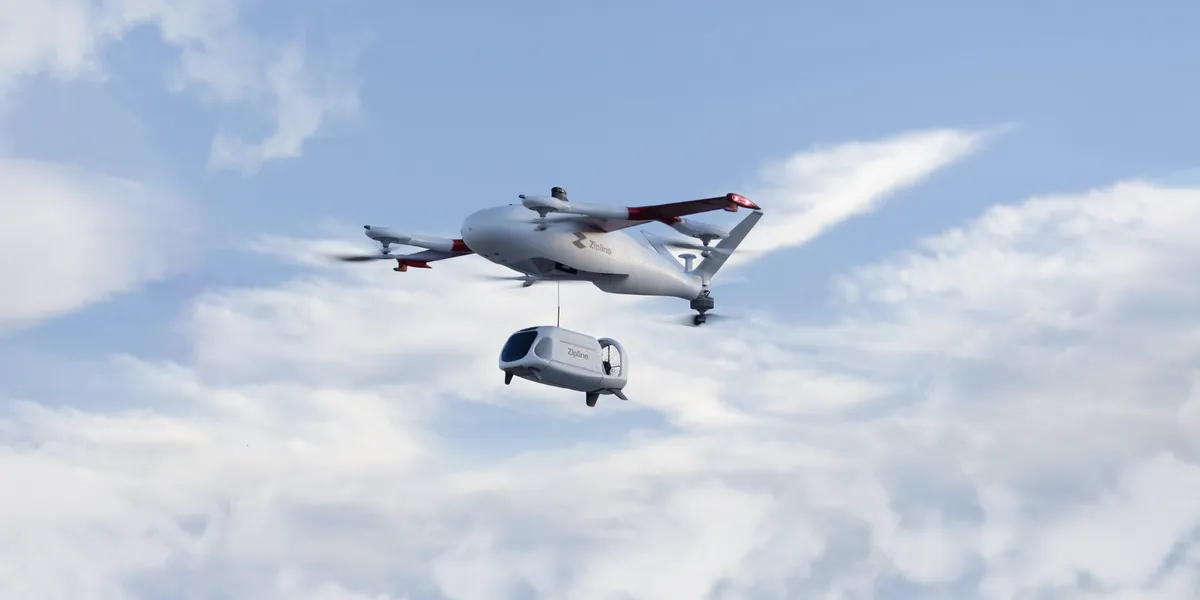
The company operates two distinct drone platforms tailored to different delivery scenarios. Platform 1 features fixed-wing aircraft designed for long-range deliveries, capable of 120-mile round trips to support enterprise and government logistics in remote areas. Platform 2, the newer system deployed in urban and suburban markets, uses a different design optimized for precision delivery directly to customers’ homes, capable of arriving in as little as 10 minutes from order placement.
In markets launching in 2026, eligible customers will gain access to tens of thousands of items through the Zipline mobile app, with delivery times as fast as 10 minutes depending on distance and product availability. This convenience factor—combined with the environmental benefits of zero-emission electric aircraft—positions drone delivery as an attractive alternative to traditional delivery vehicles, particularly for time-sensitive items or locations with traffic congestion.
The competitive landscape for autonomous drone delivery is intensifying. Zipline faces competition from well-funded rivals including Amazon’s Prime Air, Alphabet’s Wing, and smaller startups like Flytrex and Matternet. Amazon has been testing drone delivery in Texas and Arizona, while Wing recently announced plans to expand its Walmart partnership to 150 stores by 2027. However, Zipline’s combination of operational scale, technological maturity, and safety record provides significant competitive advantages.
The economic and environmental case for drone delivery continues to strengthen. According to National Highway Traffic Safety Administration data, driving 120 million miles—the distance Zipline’s drones have flown—would typically result in nearly 600 vehicle crashes, approximately 100 injuries, and at least one fatality. By removing these miles from roads, autonomous aerial delivery reduces traffic accidents, congestion, and emissions. Zipline estimates its operations help save more than 10,000 lives annually, primarily through improved access to medical supplies in under served regions.
Regulatory tailwinds in the United States are accelerating the drone industry’s growth. The Trump administration signed executive orders in June 2025 directing regulators to fast-track rules for drone operations while prioritizing American-made technology and expanding counter-drone measures ahead of major events like the 2026 FIFA World Cup. In August 2025, proposed rules allowing drones to fly beyond an operator’s visual line of sight—a key requirement for large-scale delivery—moved closer to finalization, removing a major regulatory hurdle.
The funding announcement also highlighted Zipline’s expanding international footprint. The company recently secured a $150 million partnership with the U.S. State Department, matched by contributions from African government partners, to triple its life-saving delivery network across Africa. This initiative positions American AI and robotics infrastructure as the foundation for developing-world logistics, creating both humanitarian benefits and strategic advantages for U.S. technology leadership.
Valor Equity Partners founder and CEO Antonio Gracias expressed confidence in the sector’s future, stating that “in the next five, 10 years, deliveries made by autonomous aircraft will become standard.” This prediction aligns with broader trends in automation, where technologies initially viewed as futuristic novelties—such as ride-sharing apps and mobile payments—have rapidly become everyday essentials once they prove reliable and economically viable.
For Zipline, 2026 represents what CEO Cliffton calls a “breakout year” when autonomous logistics transitions from innovative technology to everyday infrastructure. The company’s expansion into major U.S. metropolitan areas will test whether urban and suburban consumers embrace drone delivery at the same rate as customers in more remote locations. Success in these markets could catalyze even faster growth, while challenges could reveal obstacles that need addressing before truly mass-market adoption.
The broader implications extend beyond Zipline’s business success. The company’s growth validates the potential of autonomous systems to solve real-world logistics challenges while reducing environmental impact and improving safety. As drone delivery becomes commonplace, it may reshape urban planning, retail strategy, and consumer expectations around convenience and delivery speed. The next few years will determine whether autonomous aerial logistics fulfills its promise of revolutionizing how goods move through the economy.