
In powder-based 3D printing technologies such as Selective Laser Sintering (SLS) and Direct Metal Laser Sintering (DMLS), the powder distribution mechanism plays a crucial role. This system is responsible for spreading a uniform layer of powder over the build platform, a foundational step for ensuring high-quality prints. This article explores the importance, functionality, and maintenance of the powder distribution mechanism in 3D printing, highlighting its role in achieving consistent layering, precision, and optimal material usage.
Importance of the Powder Distribution Mechanism in 3D Printing
Consistency in Layer Formation: Uniform layering is essential for achieving the desired mechanical properties and surface finish in the final product. The powder distribution mechanism ensures that each layer of powder is evenly spread across the build platform, crucial for maintaining dimensional accuracy and structural integrity.
Efficiency in Material Usage: By distributing powder precisely where it is needed and in the correct amount, the mechanism helps minimize waste, making the process more cost-effective and environmentally friendly.
Speed and Productivity: A well-functioning powder distribution mechanism can significantly speed up the printing process by quickly and efficiently preparing each layer, enhancing overall productivity.
Flexibility in Design: Uniform powder layers are crucial for accurately translating complex digital designs into physical objects, especially when dealing with intricate details and geometries.
Components of the Powder Distribution Mechanism in 3D Printers
Feed Hoppers: Store the powder before it is distributed onto the build platform. These hoppers typically feature mechanisms to agitate the powder, ensuring it flows freely and consistently into the distribution system.
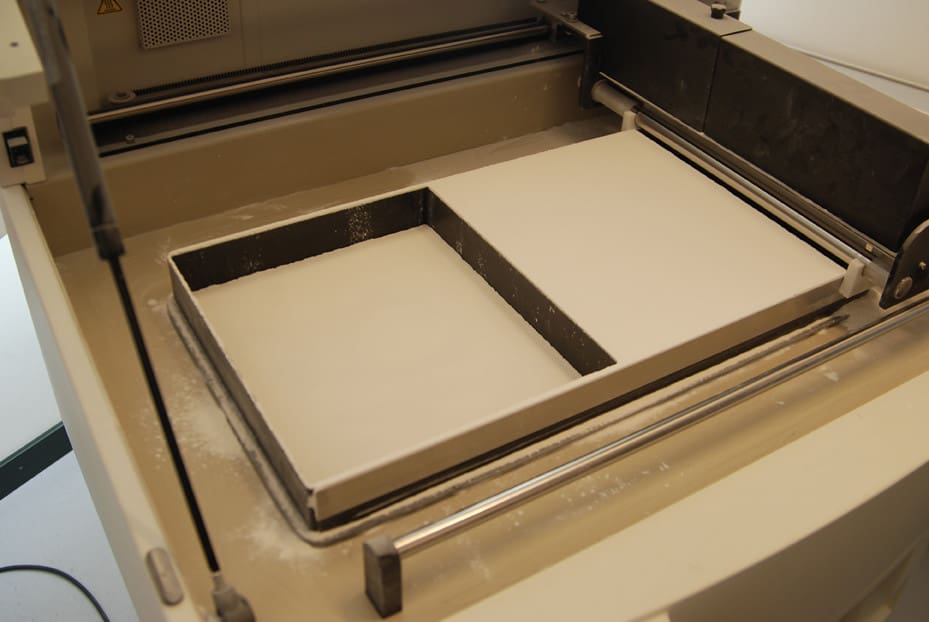
Spreader or Recoater Blade: A flat, smooth blade or roller that moves across the build platform to evenly distribute and compact the powder into a thin layer. The design and precision of the spreader are critical for achieving uniform layer thickness.
Leveling and Compaction Devices: Some systems include additional components that help level the powder bed or compact the powder after it is spread, which can be crucial for certain materials or high-precision applications.
Drive System: Includes motors and rails that control the movement of the spreader blade across the build platform. This system must offer precise control over speed and positioning to spread the powder evenly.
Control Electronics: Manage the operation of the powder distribution mechanism, coordinating its movements with the overall printing process to optimize efficiency and accuracy.
Installation and Calibration of the Powder Distribution Mechanism
Proper Installation: Ensuring that all components of the powder distribution mechanism are correctly installed and aligned is crucial for its effective operation. This includes securing the feed hoppers, aligning the spreader blade, and ensuring that the drive system is smooth and responsive.
Calibration: The mechanism must be calibrated to deliver the right amount of powder and spread it uniformly across the build platform. Calibration typically involves adjusting the height and angle of the spreader blade and fine-tuning the speed of the drive system.
Testing: Conducting tests to verify the uniformity of powder layers and the consistency of distribution across different sections of the build platform is essential for validating the performance of the mechanism.
Maintenance and Optimization of the Powder Distribution Mechanism
Regular Cleaning: Powder residues and build-up can affect the performance of the distribution mechanism. Regular cleaning is essential to maintain its functionality and prevent contamination of new powder layers.
Component Inspections: Routine inspections of the spreader blade, drive system, and other mechanical components can help detect wear or damage early, preventing print quality issues.
Lubrication and Adjustments: Proper lubrication of moving parts and regular adjustments to the spreader blade alignment and tension are necessary to ensure smooth operation and effective powder spreading.
Software Updates: Keeping the control software updated can improve the precision and adaptability of the powder distribution mechanism, allowing for better integration with newer materials and printing technologies.
Challenges and Solutions
Powder Flow Issues: Handling different powder materials can be challenging, as they may have different flow properties. Utilizing adjustable spreader blades and experimenting with agitation settings can help achieve optimal flow.
Mechanical Wear: Continuous operation can lead to wear of mechanical parts, especially the spreader blade. Using durable materials and scheduling regular replacements can mitigate this issue.
Environmental Factors: Changes in humidity and temperature can affect powder behavior. Controlling the print environment can help maintain consistent powder distribution.
The powder distribution mechanism is a vital component in powder-based 3D printing technologies, playing a key role in the quality, efficiency, and reliability of the printing process. Effective management, regular maintenance, and careful calibration of this mechanism are essential for maximizing the capabilities of 3D printers and ensuring the production of high-quality, precise, and consistent printed products. By thoroughly understanding and meticulously maintaining the powder distribution mechanism, manufacturers can achieve improved operational reliability and enhanced print quality, fully leveraging the advanced capabilities of 3D printing technology.