


The intersection of 3D printing and biomolecular engineering is heralding a new era in biomedical research and the development of therapeutics. This fusion of cutting-edge technologies enables the creation of complex biomolecular structures, which can mimic the intricate details of biological systems. From creating tissue models that can predict human responses to drugs to developing custom biocompatible materials, 3D printing is revolutionizing the field of biomolecular engineering.
The Emergence of 3D Printing in Biomolecular Engineering
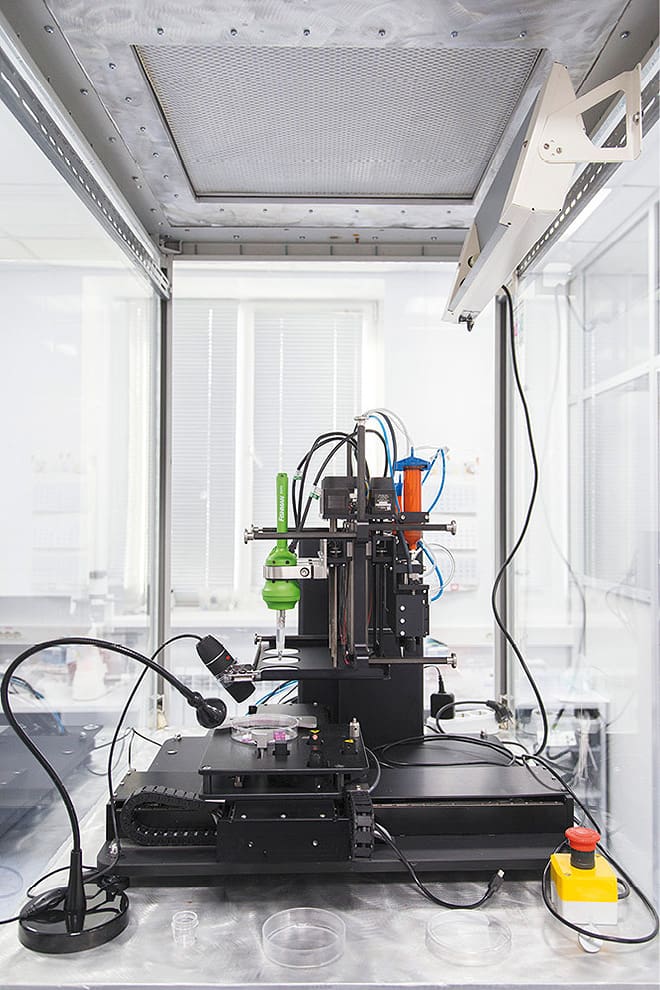
3D printing, or additive manufacturing, was initially adopted in manufacturing for creating prototypes. However, its potential in biomolecular engineering became apparent as the technology evolved to handle a wider range of materials, including biocompatible polymers, living cells, and biomolecules. Today, 3D printing is employed to fabricate structures with precise control over shape, size, and architecture that mimic natural biological processes, offering new tools for research and application in medicine.

Advantages of 3D Printing in Biomolecular Engineering
Precision and Customization: 3D printing allows for the creation of structures with specific dimensions and geometries tailored to particular biological functions, enabling researchers to design and test hypotheses in realistic models.
Speed and Efficiency: Rapid prototyping speeds up the research and development process significantly. Researchers can quickly design, print, and test various biomolecular configurations to evaluate their functionality and effectiveness.
Innovative Material Use: 3D printing enables the combination of different materials in a single print run, allowing for the creation of complex biomolecular structures with gradient densities and multiple types of biomaterials that closely replicate natural tissue or organ properties.
Cost-Effectiveness: Reducing the need for expensive tooling and the ability to produce small volumes cost-effectively makes 3D printing an attractive option for specialized research applications where bespoke designs are often required.
Key Applications of 3D Printing in Biomolecular Engineering
Tissue Engineering and Regenerative Medicine: One of the most significant applications of 3D printing in biomolecular engineering is in the field of tissue engineering. By using biodegradable scaffolds seeded with cells, researchers can create tissue constructs that mimic the native properties of biological tissues. These constructs are crucial for regenerative medicine, providing personalized solutions for tissue repair and replacement.
Drug Development and Pharmaceutical Testing: 3D printing is revolutionizing drug discovery and testing by allowing the fabrication of patient-specific organ models with physiologically relevant structures. These models are used for high-throughput screening and more accurate prediction of human responses to new drugs, reducing the reliance on animal testing and improving the efficacy and safety of pharmaceuticals.
Biosensors and Diagnostic Devices: The precision of 3D printing is particularly advantageous in creating biosensors and diagnostic devices. These devices require highly specific architectures to function effectively, and 3D printing allows for their rapid design and production, leading to faster clinical diagnostics and more personalized medicine approaches.
Artificial Organs and Implants: Biomolecular engineers use 3D printing to develop artificial organs and implants that are highly customized to the patient’s anatomy. This customization improves the compatibility and functionality of implants, enhancing patient outcomes in various medical treatments.
Challenges and Future Directions
Despite its promise, the application of 3D printing in biomolecular engineering faces several challenges:
Material Limitations: Finding materials that are biocompatible, durable, and capable of supporting cellular activities is a significant challenge. The development of new biomaterials that can meet these criteria is crucial for the advancement of 3D printing in biomolecular applications.
Regulatory Hurdles: As with any technology applied in medicine, 3D printing must navigate a complex regulatory landscape. Ensuring safety, efficacy, and quality in 3D-printed biomolecular products is essential for their acceptance and widespread use.
Technological Barriers: The resolution and scalability of 3D printing technology still limit its applications. Ongoing advancements in printer technology and biomaterial science are necessary to overcome these barriers.
Ethical Considerations: The ability to print biological structures and potentially complex organs raises ethical questions that must be addressed, including concerns about reproduction and enhancement that go beyond current medical needs.
3D printing is set to play a pivotal role in the future of biomolecular engineering, with the potential to significantly impact research and clinical practices. As the technology continues to evolve, it promises to enhance our understanding of complex biological systems and improve therapeutic outcomes. By continuing to innovate and address the challenges inherent in merging technology with biology, 3D printing can unlock new possibilities for treating diseases and improving human health.


